

The impact of process transformation jobs
Process transformation professionals solve a fundamental business problem: they convert strategic ambitions into operational outcomes. Companies that apply structured transformation practices can flip success odds from roughly 30% to near 80%, underscoring the value of experienced process transformation leaders and methods.
The financial impact of these process optimization professionals becomes tangible through improved efficiency. Productivity gains from redesigned workflows can be tracked by output per labor hour and related statistics, aligning operational improvements to measurable efficiency outcomes. Cost reductions, cycle-time compression, and throughput increases translate directly to bottom-line performance.
Customer experience improvements represent another critical value dimension. Practitioners should measure Customer Effort Score and related loyalty outcomes because reducing effort through streamlined processes correlates with higher retention and reduced churn. Simplified customer journeys drive satisfaction while reducing service costs – two things executives would lobe to hear about!
Takeaway: Process transformation jobs deliver measurable value through structured benefit realization, productivity gains, and customer experience improvements that translate strategic intent into operational results.
What responsibilities define process transformation roles?
Process transformation professionals orchestrate comprehensive change across organizational workflows and operating models. Their responsibilities span analytical diagnosis, redesign, implementation, and sustainment.
Core responsibilities include:
- Apply the DMAIC discipline: Define goals, measure current performance, analyze root causes, improve the process, and control to sustain gains.
- Assign process owners and implement a process management system: Align processes with strategy, document and standardize them, measure performance, and drive ongoing improvement.
- Define a bold, quantified transformation aspiration: Build the business case and stand up a transformation office to prioritize initiatives, track impact, resolve issues, and sustain momentum across the program.
- Define expected benefits and govern their delivery: Transition outcomes into operations and monitor to sustain value as part of benefits realization management.
- Define structure, accountabilities, governance, ways of working: Establish processes and technology so the organization can execute redesigned processes and strategy.
- Develop lean capabilities and behaviors: Empower teams to identify value, eliminate waste, and improve flow across value streams continuously.
- Embed internal controls and risk assessment: Monitor effectiveness to ensure reliable operations, reporting, and compliance.
- Lead the fundamental rethinking and radical redesign: Drive business processes toward dramatic improvements in cost, quality, service, and speed.
- Prepare, equip, and support people: Drive adoption through communications, training, and coaching so initiatives meet and sustain objectives.
- Redesign processes around end-to-end customer journeys: Improve satisfaction and reduce costs rather than optimizing isolated touchpoints.
- Systematically identify, prioritize, and automate: Use a coordinated toolkit—RPA, workflow, AI/ML—to accelerate transformation.
- Use process mining to automatically discover: Extract as-is processes from system event logs, exposing bottlenecks, rework, and conformance gaps that guide improvement priorities.
- Use the Plan-Do-Check-Act cycle: Test changes on a small scale, study results, standardize successful solutions, and scale them across the enterprise.
Takeaway: Process transformation responsibilities encompass analytical diagnosis, process redesign, change management, and benefit realization through structured methodologies that drive adoption and sustain value.
How do process transformation jobs fit into company structures?
Process transformation capability typically sits in multiple organizational structures, depending on scope, maturity, and transformation context. Understanding these reporting relationships helps practitioners navigate influence and accountability.
A Transformation Office serves as the nerve center of change, centrally located to orchestrate cross-functional work and keep the program on track—typically reporting to the CEO or executive leadership to have enterprise authority. This structure provides the governance and coordination needed for large-scale process change.
HR is a key partner in transformations to build capabilities, reshape ways of working, and sustain behavior change. Trends emphasize HR’s role in enabling organizational adaptability, making it a natural partner for process transformation teams.
Lean Six Sigma Black Belts lead cross-functional improvement projects and mentor team members, reflecting that many process-transformation practitioners operate as project leaders or individual contributors even when they don’t hold line management authority. This structure enables expertise-based influence across organizational boundaries.
Many organizations house strategy execution in an Office of Strategy Management that reports to the CEO and integrates with HR, IT, and Finance to align operations with strategic priorities. This creates a home for transformation capability that bridges strategy and execution.
Successful transformations push accountability to line leaders while the central office works closely with Operations and business units to drive execution and remove obstacles. This hybrid model balances central coordination with distributed ownership.
Takeaway: Process transformation roles span from individual contributor positions in operational excellence teams to enterprise transformation offices, with success depending on strong partnerships with executive leadership, HR, IT, and business unit leaders.
Key skills for process transformation jobs today
Process transformation careers require a unique blend of analytical rigor, technology fluency, and change-leadership capabilities that connect business strategy to operational execution.
Foundational skills include:
- Apply process mining to discover actual flows: Identify bottlenecks from event logs and quantify opportunities for improvement and automation.
- Use journey mapping to capture end-to-end customer experiences: Identify pain points so process changes improve outcomes that matter to customers.
- Use Lean Six Sigma methods to eliminate waste: Reduce variation via the DMAIC cycle, improving quality, speed, and cost in transformed processes.
- Map the end-to-end value stream: Visualize flow and delays from the customer’s perspective, then redesign for throughput and reduced waste.
- Leverage APQC’s Process Classification Framework: Standardize process architecture, benchmark performance, and create a common language across the enterprise.
- Apply TOGAF to align business processes: Ensure information, applications, and technology support strategy, making transformations coherent and sustainable.
Emerging competencies reflect evolving workplace dynamics. Deloitte’s 2024 Human Capital Trends emphasizes enduring human capabilities—adaptability, empathy, and collaboration—as vital for transformation success. These soft skills complement analytical methods.
Technology literacy is increasingly critical. McKinsey estimates gen AI could add trillions in value by automating knowledge work, making skill in integrating gen AI into workflows essential. Gartner’s 2024 tech trends calls out platform engineering and AI-augmented development—skills that enable scalable, reliable digital process change.
NIST’s AI Risk Management Framework outlines practices to map, measure, manage, and govern AI risks—capabilities needed as AI infuses processes. This governance perspective ensures responsible innovation during transformation.
Agile integration skills enable iterative delivery. Adopt Disciplined Agile to choose context-appropriate ways of working that accelerate value delivery and support iterative process transformation. This flexibility helps teams adapt to changing conditions.
Advanced capabilities include building and using Digital Twin of an Organization models, enabling simulation and optimization of process changes before implementation.
Takeaway: Success in process transformation jobs requires mastering traditional improvement methods like Lean Six Sigma and process mining while developing emerging capabilities in AI integration, agile delivery, and enterprise architecture to meet evolving organizational needs.
Which frameworks drive successful process transformations?
Process transformation frameworks provide structured approaches to diagnose challenges, design interventions, and sustain improvements. Mastering multiple models allows practitioners to select the right tool for each situation.
Essential frameworks include:
- The DMAIC cycle: Define, Measure, Analyze, Improve, Control structures data-driven process improvement to reduce variation and defects and sustain gains.
- DFSS uses DMADV: Define, Measure, Analyze, Design, Verify to design or redesign processes and services to meet customer critical-to-quality requirements from the start when incremental fixes aren’t enough.
- Kotter’s method: Create urgency, build a guiding coalition, form a vision, enlist a volunteer army, remove barriers, generate short-term wins, sustain acceleration, and institute change to anchor process changes in culture.
- SCOR standardizes end-to-end supply chain processes: Plan, Source, Make, Deliver, Return, Enable with metrics and best practices to guide transformation at scale.
- Service blueprints map frontstage interactions: Include backstage activities, support processes, and evidence across a service to redesign how value is delivered end-to-end.
- SIPOC: Suppliers, Inputs, Process, Outputs, Customers frames the process at a high level, clarifies boundaries and stakeholders, and aligns teams before deep analysis.
- The PCF: A common taxonomy for cross-industry business processes that accelerates scoping, benchmarking, and identifying performance gaps in transformation programs.
- TOC’s Five Focusing Steps: Identify the constraint, exploit it, subordinate to it, elevate it, and repeat to maximize throughput by managing the system’s limiting factor rather than optimizing local steps.
Takeaway: Proficiency across multiple frameworks—from foundational models like DMAIC and SCOR to specialized tools like service blueprints and Theory of Constraints—enables practitioners to diagnose transformation challenges accurately and design targeted interventions.
What software tools are essential in process transformation roles?
Process transformation professionals leverage diverse software categories to analyze, design, automate, and govern process change initiatives effectively.
Process mining and discovery platforms provide foundational insights:
- Celonis Process Mining: Discovers, monitors, and improves end-to-end processes from system event logs to pinpoint bottlenecks, conformance gaps, and automation opportunities.
- IBM Process Mining: Uses event data to automatically discover current processes, detect bottlenecks, simulate changes, and prioritize automation opportunities.
- ARIS Process Mining: Uncovers real process execution, analyzes variants and bottlenecks, and links to ARIS modeling for continuous improvement.
Process modeling and design tools enable documentation and standardization:
- Bizagi Modeler: Enables BPMN-based process documentation, collaboration, and simulation to design target-state processes and standardize operating procedures.
- Orbus Infinity: Provides architecture and process modeling on Microsoft 365 to document current and future state and manage transformation governance.
Enterprise automation platforms accelerate execution:
- Appian: Unifies process mining, workflow, case management, RPA, and AI on a low-code platform to rapidly design and automate transformed processes.
- Pega: Provides model-driven case management, workflows, decisioning, and AI to automate and orchestrate complex enterprise processes end-to-end.
- UiPath: Delivers enterprise RPA with process mining, task mining, orchestration, and governance to automate repetitive work and scale transformations.
- Automation 360: A cloud-native RPA platform to build, orchestrate, and monitor bots that automate tasks across applications and processes.
Integration and orchestration platforms connect systems:
- Boomi’s low-code iPaaS: Connects applications, data, and people to synchronize workflows and data flows required by redesigned processes.
- MuleSoft: Enables API-led integration and orchestration across systems, essential for connecting data and services in transformed processes.
Enterprise architecture tools align technology with strategy:
- LeanIX EAM: Maps applications, capabilities, and processes to align target operating models and plan transformation roadmaps.
Takeaway: Effective process transformation requires proficiency across process mining platforms, BPMN modeling tools, enterprise automation software, and integration solutions to discover, design, execute, and govern people-centered and technology-enabled process changes.
Qualifications needed for process transformation jobs
Process transformation roles typically require bachelor’s degrees in business, engineering, or related analytical fields. A bachelor’s degree is the typical entry-level requirement for management analysts, with some employers preferring candidates who have a master’s degree in business administration or another advanced degree.
Employers commonly seek business-related bachelor’s degrees such as business administration or management for roles that analyze and transform processes. These programs provide foundational knowledge in organizational dynamics, strategy, and operations.
Technical backgrounds offer valuable perspectives. For transformation work in supply chain and operations, employers commonly require a bachelor’s degree in supply chain management, business, or industrial engineering. Process redesign in operations often draws from industrial engineering, with industrial engineers typically needing a bachelor’s in industrial engineering or a related engineering field.
Analytical capabilities are increasingly valued. Roles that optimize processes using analytics typically require at least a bachelor’s degree, with some positions preferring a master’s. Common majors include operations research, engineering, mathematics, analytics, computer science, or related fields.
Professional experience often matters more than specific educational backgrounds. Employers value demonstrated experience leading improvement initiatives, project management capabilities, and understanding of organizational change dynamics.
Industry-specific knowledge can be advantageous. Manufacturing organizations prefer candidates familiar with production systems and lean principles. Financial services values understanding of compliance and risk management. Technology companies seek practitioners experienced with agile methodologies and digital transformation.
Takeaway: Process transformation careers welcome diverse educational backgrounds in business, engineering, and analytics but require strong analytical skills, project management capabilities, and demonstrated experience leading process improvement initiatives across various contexts.
What certifications benefit a process transformation career?
Professional certifications demonstrate expertise and commitment to process transformation best practices. Several organizations offer respected credentials that enhance career prospects.
Leading certifications include:
- ASQ’s Certified Six Sigma Black Belt: Validates thorough understanding and application of Six Sigma philosophies and principles with demonstrated team leadership and mastery of the DMAIC methodology for complex, cross-functional process improvements.
- The Certified Business Process Professional: Recognizes demonstrated knowledge and experience across the BPM CBOK, including modeling, analysis, design, transformation, and governance—foundational to enterprise process transformation.
- The Certified Business Process Leader: Validates the capability to lead and govern BPM at enterprise scale, aligning strategy, value realization, and operating models for transformation.
- The PMP: Validates the ability to lead projects and teams to deliver business results across predictive, agile, and hybrid approaches—critical for orchestrating multi-workstream process transformations.
- PMI’s Professional in Business Analysis: Highlights expertise in working with stakeholders to define requirements, shape outputs, and drive intended business outcomes—core to process redesign and transformation.
- Prosci’s Change Management Certification: Builds capability to apply the Prosci Methodology and ADKAR Model to drive adoption and usage—essential to realizing benefits from process transformation.
Specialized certifications address specific contexts:
- The Certified Business Architect: Recognizes knowledge of the BIZBOK Guide and the ability to structure capabilities, value streams, and stakeholders—linking strategy to execution for transformation.
- TOGAF certification: Validates knowledge of a proven enterprise architecture method to design, plan, implement, and govern change—aligning business capabilities, information, applications, and technology for transformation.
- SAFe Practice Consultants: Change agents who lead Lean-Agile transformations, enabling enterprise agility, value streams, and continuous improvement at scale.
- ITIL 4 Managing Professional: Provides practical and technical knowledge to run successful IT-enabled services, teams, and workflows across the service value system—key for end-to-end process transformation in digital environments.
- OCEB 2: Certifies BPM knowledge from fundamentals to advanced levels, including BPMN modeling and process optimization, ensuring rigorous, standards-based process design for transformation.
- The UiPath Certified RPA Associate: Validates foundational RPA concepts and UiPath skills for identifying processes for automation and collaborating on solution design—common levers in process transformation.
Takeaway: Professional certifications enhance credibility and career prospects, with Six Sigma Black Belt and CBPP offering the most widely recognized credentials, supplemented by specialized certifications for agile, architecture, automation, and change management contexts.
Advancing your process transformation career
Process transformation offers diverse career paths with opportunities to specialize by industry, methodology, or organizational level. Progression typically follows increased scope, complexity, and leadership responsibility.
Common career progression includes:
- Process Analyst/Coordinator: Entry-level support roles assisting with data collection, documentation, and basic analysis
- Process Improvement Specialist/Consultant: Mid-level practitioners leading specific improvement projects or workstreams
- Senior Process Manager/Black Belt: Experienced practitioners managing complex programs or multiple initiatives
- Process Transformation Director/Program Lead: Leadership roles overseeing enterprise transformation or building improvement capability
- Chief Transformation Officer/VP Operations Excellence: Executive-level roles leading organization-wide transformation strategy
Employment of management analysts is projected to grow 10% from 2022 to 2032—faster than average—driven by organizations seeking efficiency and cost control across industries. This growth creates expanding opportunities for process transformation professionals.
Common entry points include transitions from related fields. Business analysis enables enterprise change by defining needs and recommending solutions, including process improvements—making BA a common feeder into process transformation roles. O*NET lists alternate titles for management analysts such as Business Analyst, Business Consultant, Management Consultant, Organizational Development Consultant, and Program Management Analyst—common titles for process transformation practitioners.
ASQ’s job descriptions catalogue includes titles frequently used in process transformation careers, such as Continuous Improvement Manager, Lean Six Sigma Black Belt, Process Engineer, and Quality Manager. These titles reflect diverse organizational contexts for transformation work.
Industry opportunities span sectors. The largest employers of management analysts include professional, scientific, and technical services; government; management of companies; and finance and insurance—indicating strong opportunities across services, public sector, and financial industries.
Takeaway: Process transformation careers offer multiple entry points through related fields like business analysis, project management, and industrial engineering, with progression opportunities spanning from analyst roles to executive transformation leadership positions.
Which associations support process transformation professionals?
Professional associations provide networking, education, and credibility that accelerate career development in process transformation.
Primary process transformation associations include:
- Association of Business Process Management Professionals (ABPMP): Global professional association for Business Process Management; publishes the BPM CBOK and offers CBPP/CBPA certifications relevant to end-to-end process transformation leaders.
- American Society for Quality (ASQ): Global quality association advancing Lean Six Sigma, continuous improvement, and process excellence—core toolkits for process transformation.
- APQC: Nonprofit benchmarking and best-practices organization; steward of the Process Classification Framework and a leading community for process and performance management.
- Lean Enterprise Institute: Nonprofit founded by James P. Womack focused on lean transformation, capability building, and enterprise change rooted in the Toyota Production System.
Related professional organizations offer valuable resources:
- Project Management Institute (PMI): Global association for project and change leaders; provides Disciplined Agile and organizational transformation learning relevant to process change execution.
Takeaway: Active participation in associations like ABPMP, ASQ, and APQC provides essential networking, certification pathways, and professional development opportunities that distinguish process transformation professionals in the marketplace.
What conferences are best for process transformation professionals?
Professional conferences provide learning, networking, and exposure to emerging trends that advance process transformation careers.
Premier process transformation events include:
- BTOES: Official homepage for Business Transformation & Operational Excellence Summit, one of the largest gatherings of leaders driving business transformation, operational excellence, and end-to-end process change.
- OPEX Week: A flagship annual summit focused on operational excellence, end-to-end process transformation, and enterprise-wide improvement.
- APQC’s Annual Process & Knowledge Management Conference: Event dedicated to process management, performance measurement, and continuous improvement across the enterprise.
- ASQ’s Lean and Six Sigma Conference: Annual event focused on continuous improvement, process optimization, and operational excellence.
- Shingo Conference: A leading event on operational excellence principles and enterprise-wide process improvement.
Technology-focused events offer automation perspectives:
- Celosphere: Celonis’ global process mining conference focused on process intelligence, execution management, and transformation at scale.
- ICPM: The leading scientific and industrial conference dedicated to process mining for transformation and continuous improvement.
- PegaWorld: Pega’s annual conference on workflow automation, case management, and end-to-end transformation.
- Appian World: A conference focused on low-code process automation, case management, and digital transformation at enterprise scale.
- CamundaCon: A leading BPMN and process orchestration conference for scaling process automation and transformation programs.
Academic and practice-bridging conferences provide thought leadership:
- BPM Conference: A premier global forum advancing methods and tools for business process management and transformation.
- Building Business Capability (BBC): A major conference uniting business analysis, business architecture, business process, and transformation disciplines.
Takeaway: Regular attendance at conferences like BTOES, OPEX Week, and Celosphere provides essential professional development, networking opportunities, and exposure to emerging process transformation practices and technologies.
Salary data for process transformation jobs
Process transformation compensation varies significantly based on experience level, geographic location, industry, and organizational scope.
Total pay range: $149K – $261K/yr with median total pay of $196K/yr for transformation manager positions in the United States. This range reflects the premium placed on transformation expertise and the strategic importance of these roles.
Compensation typically progresses through career stages:
- Entry Level: Junior analyst and coordinator positions typically start in the $70K-$90K range, reflecting foundational analytical and project support capabilities.
- Mid Level: Process improvement specialists and consultants see increases to $95K-$135K as they take on project leadership responsibilities and demonstrate measurable impact.
- Senior Level: Senior managers and Black Belts often earn $130K-$180K, reflecting mastery of methodologies and ability to lead complex, cross-functional initiatives.
- Executive Level: Director-level and VP positions reach $180K-$260K+, reflecting strategic leadership of enterprise transformation portfolios.
Total compensation includes additional elements beyond base salary. Bonuses, profit sharing, and equity can add 15-30% to base compensation, particularly in consulting firms and technology companies. Performance-based incentives often tie to realized benefits from transformation initiatives.
Geographic and industry factors significantly impact compensation. Major metropolitan areas and technology hubs typically offer 20-30% premiums to reflect cost of living. Technology, financial services, and management consulting generally provide premium compensation compared to manufacturing or non-profit sectors.
Consulting roles often command higher compensation due to project-based intensity and client-facing requirements. Internal corporate roles may offer lower base salaries but provide better work-life balance and long-term stability.
Takeaway: Process transformation salaries span from $70K-$90K for entry-level roles to $250K+ for executive positions, with total compensation packages including performance bonuses and equity that can increase total earnings by 15-30% above base salary.
Final thoughts
Process transformation jobs represent one of the most impactful career paths for professionals who combine analytical rigor with strategic thinking and change leadership. As organizations face mounting pressure to improve efficiency, enhance customer experience, and leverage emerging technologies like AI and automation, skilled transformation practitioners who can bridge the gap between strategy and execution will continue to be in high demand. Whether you’re transitioning from business analysis, engineering, project management, or starting fresh in this field, the combination of structured methodologies, emerging technologies, and measurable business impact makes process transformation a career that delivers both personal fulfillment and organizational value.
Tags:
Related Insights
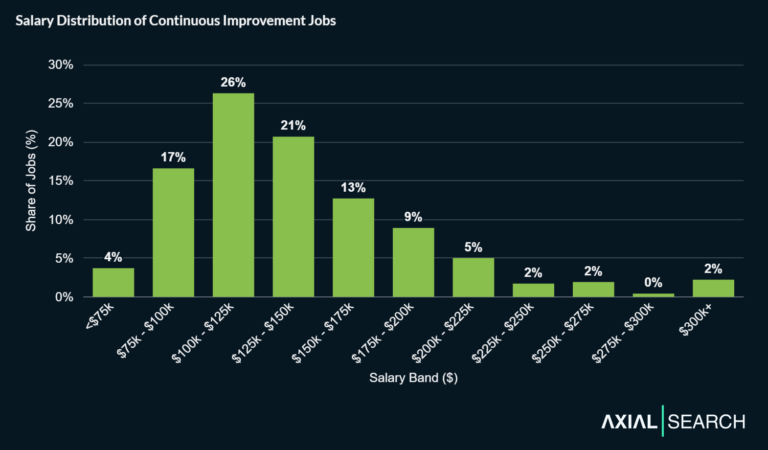
Continuous Improvement Jobs in 2026: Analyzing 1,000+ Posts
Continuous improvement professionals redesign operational workflows to eliminate waste, reduce costs and boost efficiency. We analyzed 1,086 continuous improvement jobs...
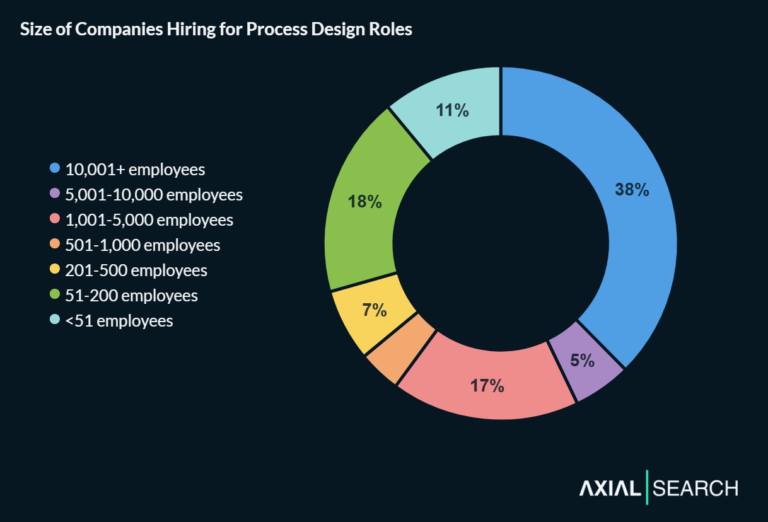
Market Analysis: Insights from 928 Process Design Jobs
Process design professionals analyze and redesign workflows, eliminating waste and building systems that improve how organizations operate. We analyzed 928...
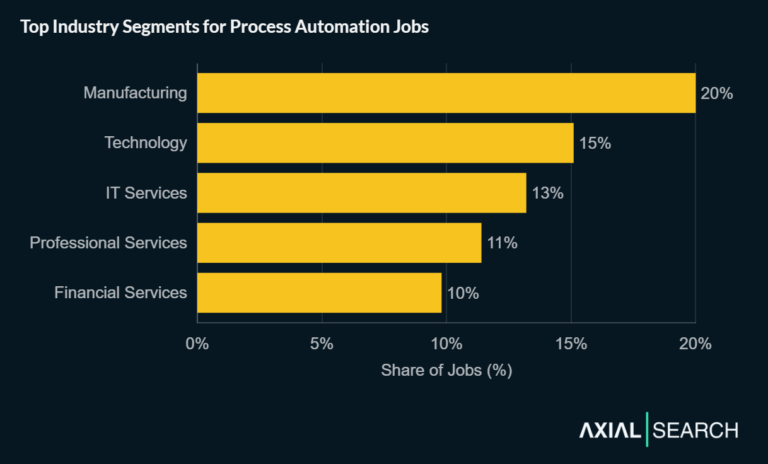
What 695 Process Automation Jobs Reveal About 2026
Process automation professionals design robotic workflows, integrate automation platforms and eliminate manual processes across business operations. We analyzed 695 process...
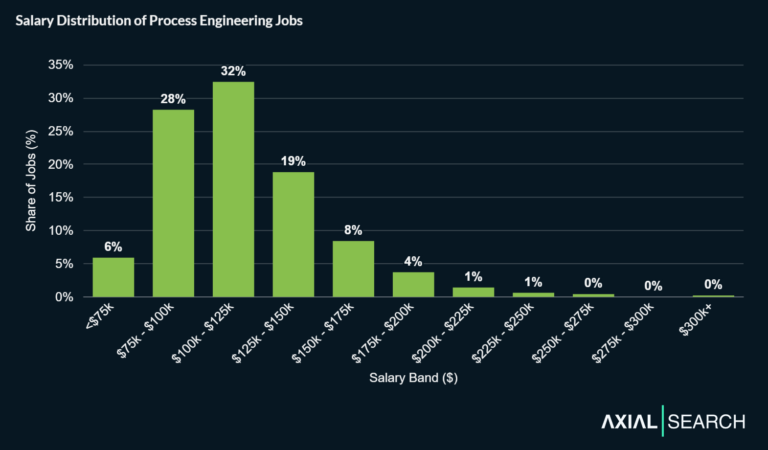
Process Engineering Jobs: Insights from 6,000+ Posts
Process engineers design and optimize workflows to improve efficiency, reduce waste and ensure product quality. We analyzed 6,210 process engineering...

What You Need to Know About Operational Excellence Jobs
Organizations face relentless pressure to do more with less while preserving quality and customer satisfaction. Yet, many struggle to turn...

A Comprehensive Breakdown of Process Improvement Jobs
Companies lose revenue through inefficient processes. Targets process improvement initiatives can tackle this waste head-on. Process mining exposes bottlenecks and...