
Digital Transformation Jobs in 2026: What 1,800 Postings Reveal
Digital transformation's 2026 job market, mapped from 1,781 US postings: what these leadership roles pay, how hot hiring demand runs, whether the work is remote, and what digital transformation leaders actually do — the complete picture for candidates and employers alike.
 Updated: August 11, 2026
- Judgment beats execution: Use case selection and securing sponsorship rank highest in the digital transformation leadership profile — you're hired to pick the right battles and get them funded. Architectural fluency ranks lowest.
- Senior and specialized: 34% of roles sit at Manager level, another 17% at Director — this is a leadership function, not a support one.
- Pay is solid but caps fast: The median digital transformation salary is $164,000, and unlike most senior tracks, pay compresses sharply once you pass Manager.
- Mostly office-adjacent: Of digital transformation postings that specify a work model, 67% are hybrid and only 17% are fully remote.
- ERP fluency matters most: Employers mention ERP platforms in 35% of digital transformation postings and Agile in 33% — breadth across systems beats narrow specialization.
- Enterprise-scale hiring: 65% of digital transformation roles come from companies with 10,000+ employees — if you're competing for talent, you're bidding against firms with deep pockets.
What do digital transformation leaders do?
Digital transformation leaders are hired to decide which changes are worth making and get executives behind them, not to build the systems themselves. Use case selection and securing sponsorship are the two most-screened capabilities across the 1,781 US postings analyzed here.
That holds across the seniority ladder: even IC-level digital transformation postings ask for people who can scope a change program and justify it, not just execute a project plan handed down from above. Finding leaders who fit that profile is exactly what AI executive search is built to do. It's a leadership and judgment role first, a technical one second.
The leadership profile employers screen for in digital transformation roles
Use case selection, securing sponsorship, operating model design and value framing lead what employers screen for in digital transformation candidates, mapped through our Three-Lens Leader framework.
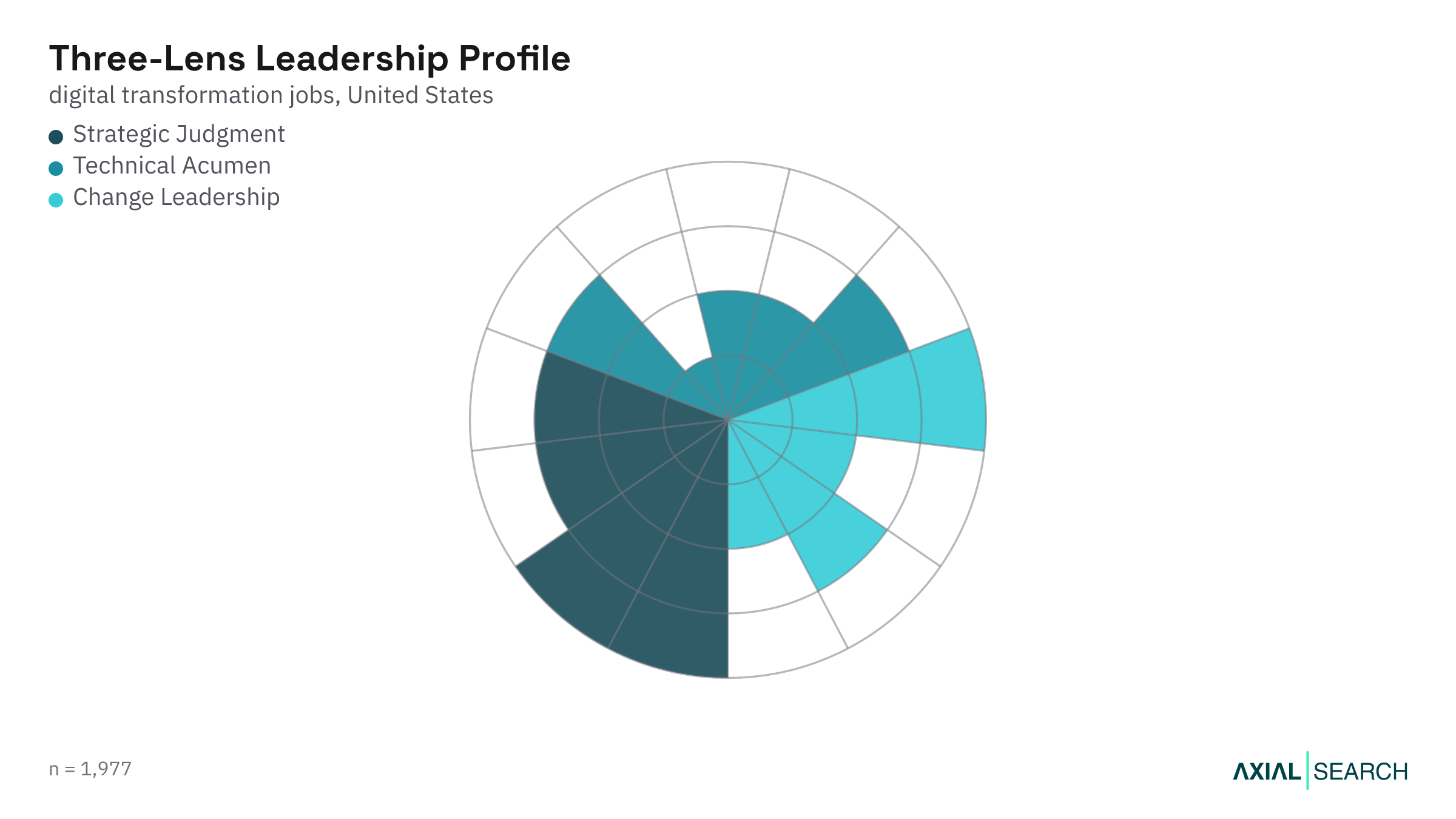
Architectural fluency ranks lowest of the thirteen capabilities we track, with driving adoption and shaping the narrative also trailing the pack. Digital transformation leaders are judged on the choices they make and the buy-in they secure, not on how deep their technical build skills run.
The skills digital transformation leaders need on the job
ERP platforms and Agile are the two most-requested skills in digital transformation postings, at 35% and 33% respectively. Cloud platforms, SQL and observability round out the next tier — breadth across enterprise systems matters more than depth in any one of them.
The full skills breakdown, including certifications and degree fields, lives on our digital transformation careers guide.
The credentials and experience digital transformation roles expect
Most digital transformation postings ask for a degree and around five years of experience, rising to a decade at Director level and above. 84% of postings require a degree, but the bar climbs with seniority rather than jumping sharply.
See our digital transformation careers guide for the full qualifications and certification breakdown.
Is digital transformation a good career?
Digital transformation is a senior, steady hiring category, with no seasonal dips to wait out. The path in runs through judgment and delivery experience, not a technical specialty.
That steadiness cuts both ways: the volume is real, but so is the competition, since every large enterprise with legacy systems to modernize is hiring for the same profile.
What digital transformation roles pay
The median digital transformation salary is competitive, and pay climbs steadily with seniority before compressing sharply above Manager.
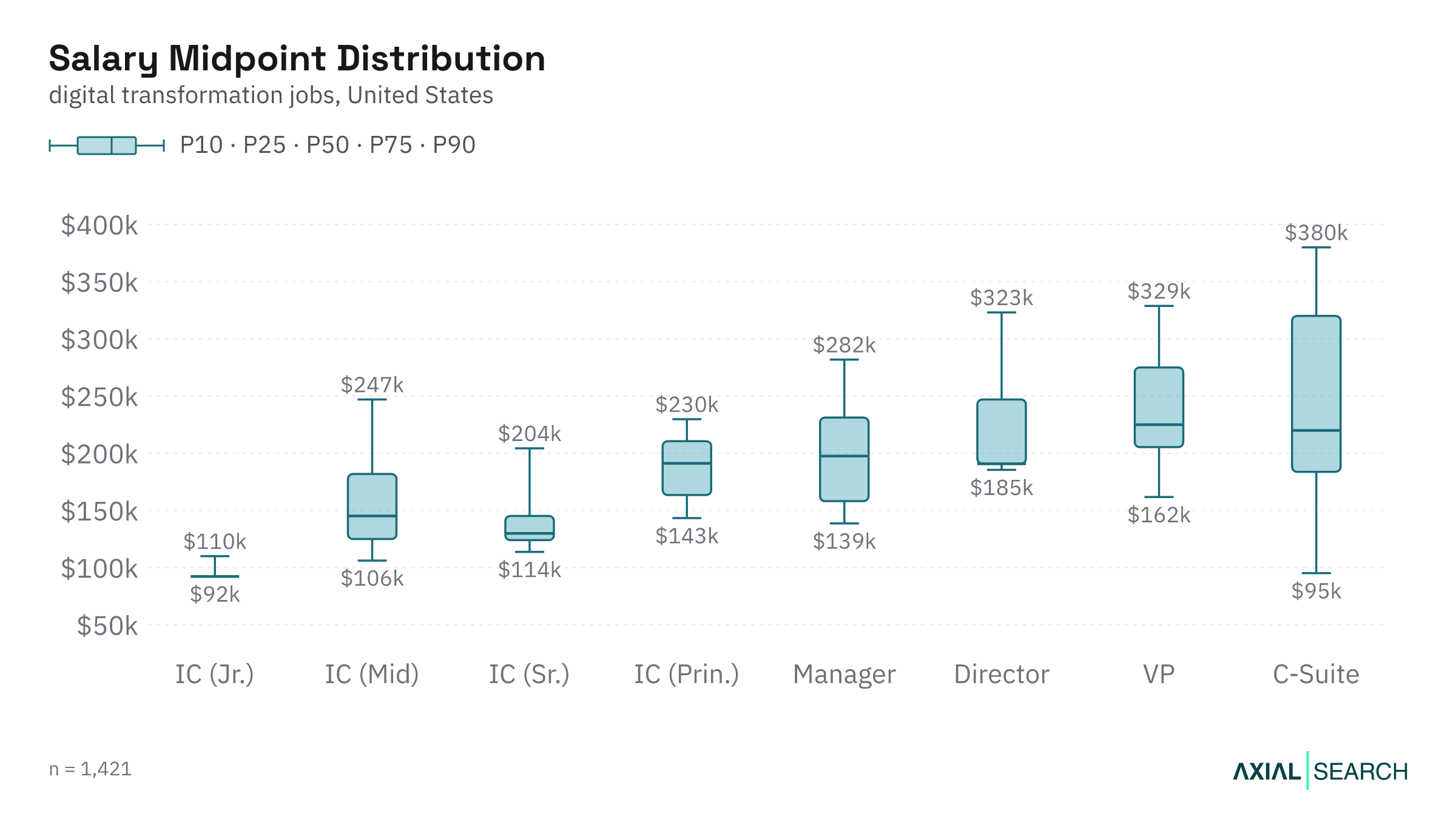
Bonus shows up in digital transformation postings, equity in just 4%. The full breakdown by seniority, sector and location lives on our digital transformation salaries page.
How hot is the digital transformation job market?
74% of US digital transformation postings sit at senior level or above. Enterprises are buying people who can run change programs, not staff them.
For candidates, that means roles keep arriving but competition stays high — you don't get a buyer's market. For employers, it means your rivals are in the market at the same pace you are, so speed matters more than waiting for a lull.
Who's hiring digital transformation talent
This is a leadership market — 34% of digital transformation postings are Manager-level and many are Director-level positions.
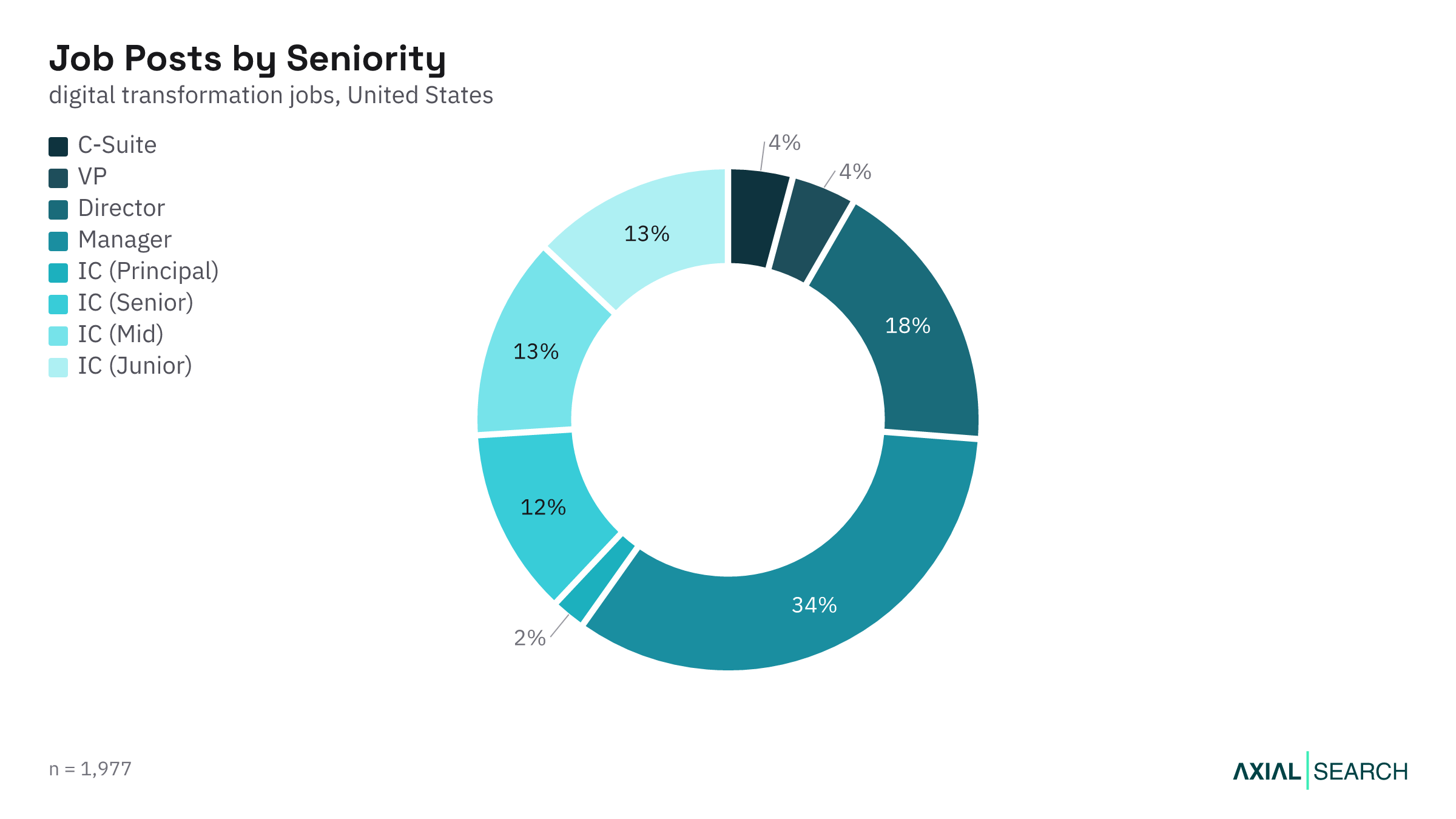
Professional Services firms post 35% of all digital transformation roles, more than any other sector. Our digital transformation hiring guide breaks down the full sector and company-size picture, plus who you're bidding against for talent.
Are digital transformation jobs remote?
Not mostly — of digital transformation postings that specify a work model, 67% are hybrid and 14% are on-site. This is a hybrid-first market, not a remote-first one.
Neither candidates nor employers should read that as a requirement to live near a specific city: hybrid means part-time in the office, and the geographic spread of postings backs that up.
Where digital transformation jobs are located
Digital transformation hiring spreads evenly across the country — Texas leads with 11% of postings, California follows at 10%, and no single state dominates.
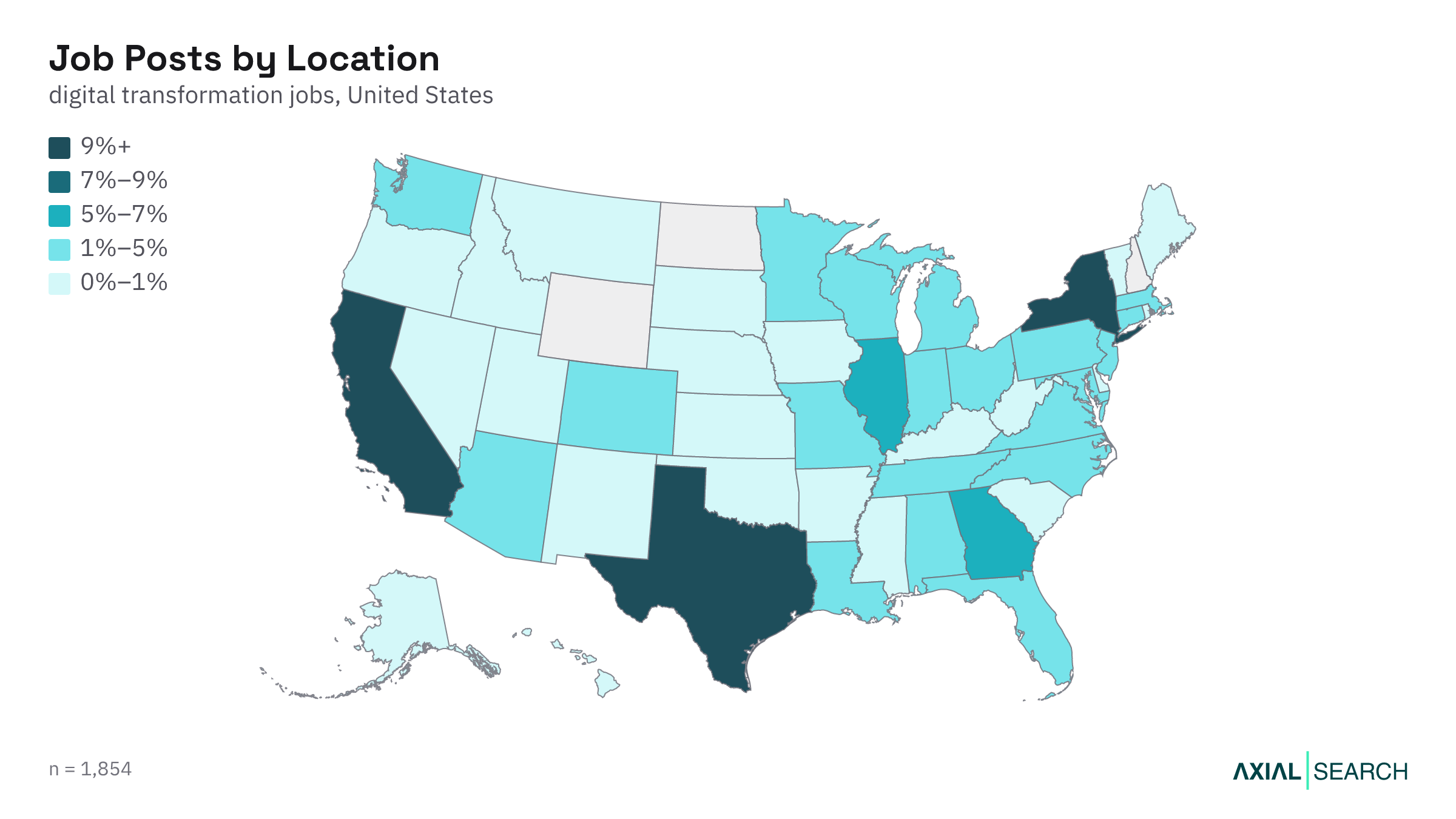
New York, Illinois, New Jersey and Georgia all carry real volume too. The full state and city breakdown, including who's hiring where, lives on our digital transformation hiring guide.
Final Thoughts
For candidates. Digital transformation is a leadership function dressed up as a tech mandate. Employers are hiring you to choose the right fights, frame the value and get buy-in — not to build the systems yourself. Show you can read a room, secure sponsorship and translate business priorities into a transformation roadmap; ERP fluency, Agile and cloud platforms are table stakes, but judgment and political skill are what separate the offer from the rejection. If you focus more on aligning AI capabilities with business objectives than on enterprise-wide change, the AI strategy job market is the closer fit.
For employers. You're hiring against Professional Services firms with deep pockets and fast close cycles — 35% of the market is chasing the same enterprise-scale talent pool you are. Focus on candidates who've already picked the right use cases and secured executive sponsorship in prior roles; those capabilities predict success better than platform certifications do. Our digital transformation hiring guide breaks down who you're competing with and how to assess candidates for the role.
Methodology & sources
- Data sources. Job data is collected from publicly available postings on online job boards and updated weekly, covering US roles posted since January 2026. Explore and filter it on our live AI job market dashboard.
- Salaries are derived from the minimum and maximum bands employers post, annualized and reported as percentiles, not averages. The full salary breakdown by seniority, sector and location lives on digital transformation salaries.
- Hiring volume counts matching postings per week; location, seniority and sector figures are each group's share of postings.
- The leadership profile reflects the relative emphasis across leadership capabilities inferred from job-description language; skills are drawn from AI analysis plus programmatic scanning of posting text.
- Skill and capability figures reflect what postings mention — an item not appearing means it wasn't stated in the posting, not that it isn't wanted.

How to Think About Digital Transformation Hiring in 2026
What it takes to hire digital transformation leaders in 2026: pay benchmarks, how competitive the market is, where talent concentrates, and how to assess candidates, all drawn from 1,781 US job postings analyzed this…

Digital Transformation Salaries: 1,800 Postings, Benchmarked
What digital transformation leaders earn in the US in 2026: the median salary, how pay scales across eight seniority levels, the highest-paying sectors and states, and how often bonus and equity show up, benchmarked…

The Skills That Land Digital Transformation Roles in 2026
How to become a digital transformation leader in 2026: the qualifications, degrees, certifications and skills that 1,781 US job postings actually screen for, the leadership profile employers hire against, and how to…
Turn AI ambition into lasting business value
Whether you're hiring your first AI leader or scaling enterprise transformation capability, we help you define, assess and recruit the people who make it stick.