

The impact of business process reengineering jobs
Business process reengineering roles are critical for companies under pressure to do more with less. Rising costs, shifting customer expectations, and constant technological change demand leaner, smarter operations. Reengineering leaders make this possible by dismantling outdated workflows and rebuilding them for speed, quality, and efficiency. They help organizations rethink how work gets done, not just improve what already exists.
The payoff is substantial. Companies that redesign processes from the ground up often see dramatic gains in productivity, cost efficiency, and customer satisfaction. They cut cycle times, reduce waste, and free up capacity for innovation. In contrast, organizations that rely on incremental fixes usually struggle to keep pace with market demands.
These process optimization professionals make transformation tangible. They connect strategy to execution, using data, automation, and design thinking to build systems that scale. Their work ensures that every process contributes directly to business goals and measurable outcomes. With them, organizations become faster, more resilient, and better equipped to compete. Without them, complexity grows unchecked and efficiency erodes over time.
Takeaway: Business process reengineering jobs create measurable impact through dramatic improvements in cost, quality, service, and speed, with success tracked through comprehensive performance metrics that demonstrate transformation value.
What responsibilities define business process reengineering jobs?
Business process specialist jobs involve complex, multi-faceted responsibilities that span from strategic analysis to operational implementation. These roles require both analytical rigor and change leadership capabilities.
Core responsibilities include:
- Cross-functional Team Leadership: Assemble and lead cross-functional reengineering teams with strong executive sponsorship to break silos and redesign work around end-to-end outcomes.
- Process Discovery and Analysis: Lead discovery of the real process using techniques like process mining and mapping to quantify baseline performance (cycle time, cost, defects) and diagnose root causes.
- Process Identification and Prioritization: Identify and prioritize core, end-to-end processes for radical redesign aligned to business goals and customer value; define objectives and success criteria before redesign.
- Radical Process Redesign: Drive fundamental rethinking and radical redesign of end-to-end processes to achieve dramatic improvements in cost, quality, service, and speed—challenging legacy assumptions and functional handoffs.
- Performance Target Definition: Define performance targets and KPIs for cost, quality, service, and speed, and use them to steer redesign and post-implementation monitoring.
- Technology Integration: Select and deploy enabling technologies—such as workflow automation, RPA/AI, and ERP platforms—to make redesigned processes possible at scale.
- Process Governance: Establish end-to-end process ownership and governance—process owners are accountable to design, measure, and improve processes and to align stakeholders across functions.
- Risk and Compliance Integration: Integrate risk and compliance controls directly into redesigned processes—internal control is a process embedded in operations with activities, owners, and monitoring.
- Implementation and Change Management: Plan and execute pilots, implementation, training, and change management to operationalize the new process and transition roles and responsibilities.
- Performance Monitoring: Monitor performance against baseline and KPIs after go-live and iterate to optimize the process for sustained results.
Takeaway: Business process reengineering jobs encompass end-to-end transformation leadership, from radical process redesign and technology integration to governance establishment and sustained performance optimization.
How do business process roles fit within an organization?
Business process roles typically operate at the intersection of strategy and execution, requiring close collaboration with senior leadership and cross-functional teams. Organizational placement varies based on scope and transformation maturity.
Common reporting structures include:
- CEO-Level Transformation Office: McKinsey describes a Transformation Office as the CEO’s nerve center that reports directly to the CEO and coordinates work across business units and functions—common placement for BPR teams or where they closely partner.
- Executive Sponsorship Model: HBR’s foundational reengineering article emphasizes that radical process redesign must be driven by top management and organized around end-to-end processes rather than functions, implying sponsorship at the highest level and cross-functional reach.
- Business-IT Partnership: IBM explains that business process reengineering is the radical redesign of end-to-end processes to achieve dramatic improvements and is often enabled by information technology—requiring tight collaboration between business units and IT.
Business process manager jobs often serve as the bridge between strategic vision and operational execution, working directly with C-level executives while managing cross-functional implementation teams. The scope determines whether professionals operate as individual contributors or lead larger transformation teams with dedicated analysts and project managers.
Takeaway: Business process roles require strategic positioning with direct executive access and cross-functional authority to drive radical change across organizational silos and functional boundaries.
Key skills for business process manager jobs
Success in business process reengineering jobs requires a unique combination of analytical, technical, and leadership capabilities. These roles demand both deep process expertise and the ability to drive organizational change.
Essential skills include:
- Lean Six Sigma Methodologies: Lean Six Sigma combines waste elimination with variation reduction; practitioners use DMAIC, 5S, and other tools to achieve dramatic improvements in cost, quality, and speed—central BPR aims.
- Change Management Excellence: Projects with excellent change management are 7x more likely to meet or exceed objectives, underscoring the importance of sponsorship, coaching, and resistance management in BPR.
- BPMN Process Modeling: BPMN is the de facto standard for documenting and communicating process designs in a way that is understandable to business stakeholders and technical implementers—core to BPR deliverables.
- Process Mining Analytics: Process mining analyzes system event logs to visualize actual process flows, bottlenecks, and deviations, accelerating discovery and prioritization for reengineering.
- Value Stream Mapping: Value-stream mapping reveals end-to-end flow, highlights waste and delays, and supports designing a future-state process—an essential technique to scope and target BPR.
- Root Cause Analysis: Root Cause Analysis methods (e.g., 5 Whys, Fishbone) identify underlying causes of defects, delays, and rework so BPR designs address systemic issues rather than symptoms.
- Design Thinking Facilitation: Design thinking promotes human-centered, collaborative problem solving—facilitation of cross-functional workshops helps surface needs, ideate, and iterate future-state BPR designs.
- Simulation Modeling: Simulation models let teams test what-if scenarios and quantify impacts (wait times, throughput, costs) without disrupting operations—valuable for BPR decision-making before rollout.
- RPA and Automation: Robotic Process Automation replicates human actions on digital systems to reduce cost and cycle time; it is a common BPR lever to automate routine steps and enable hyperautomation.
- TOGAF Business Architecture: TOGAF’s Business Architecture phase develops target business processes, capabilities, and information to realize desired outcomes—providing structure for BPR to align with strategy and IT.
- Power Skills for Collaboration: Communication, collaborative leadership, and problem solving are top ‘power skills’ linked to project success—critical for aligning cross-functional BPR stakeholders and sustaining adoption.
- Generative AI Competency: Generative AI is reshaping operations by accelerating documentation, knowledge work, and decision support—BPR leaders need competency to identify GenAI-enabled process changes and controls.
Takeaway: Business process manager jobs require mastery of analytical methods, process technologies, and collaborative leadership skills to drive radical transformation and sustain organizational adoption.
What frameworks are important for business process specialist jobs?
Professional success in business process specialist jobs depends on fluency across multiple frameworks and methodologies. These structured approaches provide the foundation for systematic process analysis, redesign, and improvement.
Core frameworks include:
- HBR’s Foundational BPR Definition: BPR is the fundamental rethinking and radical redesign of business processes to achieve dramatic improvements in cost, quality, service, and speed—focusing on end-to-end processes rather than tasks.
- Five-Step BPR Methodology: A five-step approach: develop business vision and process objectives; identify processes to be redesigned; understand and measure existing processes; identify IT levers; design and build a prototype of the new process.
- DMAIC for Process Optimization: Define, Measure, Analyze, Improve, Control—use DMAIC to stabilize, optimize, and lock in gains of redesigned processes with data-driven rigor and control plans.
- DMADV for New Process Design: Define, Measure, Analyze, Design, Verify—apply when creating new processes or when existing ones cannot meet CTQs, aligning with BPR’s clean-sheet design imperative.
- Design Thinking Process: Empathize, Define, Ideate, Prototype, Test—use human-centered methods to reimagine processes from customer needs, preventing the automation of waste.
- SIPOC Analysis: A high-level map of Suppliers, Inputs, Process, Outputs, and Customers to clarify boundaries, stakeholders, and requirements at the outset of reengineering.
- Value Stream Mapping: Map current and future states to visualize flow, expose waste, and design an improved end-to-end process that delivers value with fewer delays and handoffs.
- Theory of Constraints: Identify the system’s constraint, exploit it, subordinate other processes, elevate the constraint, and repeat—ensuring redesign targets the true bottleneck to maximize throughput and speed.
- Service Blueprinting: Blueprints visualize customer actions, frontstage interactions, backstage processes, and support systems to redesign service operations holistically and avoid externalizing complexity to customers.
- APQC Process Classification Framework: Use APQC’s Process Classification Framework to define end-to-end processes, standardize scope, and benchmark performance against peers—reducing ambiguity and silo bias in reengineering work.
- Kaikaku Breakthrough Improvement: Kaikaku drives step-change improvements in a short time—complementing kaizen’s incremental approach and aligning with BPR’s aim for breakthrough performance.
Takeaway: Business process specialist jobs require fluency across multiple frameworks, from traditional BPR methodologies to modern design thinking approaches, enabling practitioners to select the right tools for each transformation context.
Which tools are used in business process reengineering jobs?
Business process reengineering jobs leverage diverse software categories to analyze, design, and implement transformed processes. These tools span from specialized BPM platforms to emerging AI-powered automation solutions:
- Celonis Process Mining: Discovers and analyzes how processes actually run across systems to identify bottlenecks and improvement opportunities for reengineering.
- Bizagi Modeler: Lets teams model and document processes with BPMN and publish them for analysis as inputs to BPR.
- IBM Blueworks Live: A cloud-based tool for documenting, analyzing, and improving business processes via collaborative mapping.
- ARIS: Supports end-to-end process design, analysis, governance, and optimization, including process mining for reengineering efforts.
- Appian: Designs, automates, and optimizes end-to-end workflows to implement redesigned processes quickly.
- Automation 360: A cloud-native RPA platform for automating business processes and eliminating manual work at scale.
- UiPath Business Automation Platform: Provides enterprise RPA plus process and task mining to automate and improve processes targeted by BPR.
- Pega Platform: Unifies case management, BPM, workflow automation, and decisioning to operationalize reengineered processes.
- HOPEX Business Process Analysis: Documents and analyzes processes to identify improvements and align them with enterprise architecture.
Takeaway: Business process reengineering jobs require proficiency across process mining, modeling, automation, and enterprise platforms to analyze current state, design future state, and implement transformed processes at scale.
Qualifications for business process reengineering jobs
Business process reengineering jobs typically require strong educational foundations combined with practical experience in process improvement, change management, or related analytical disciplines. Many practitioners enter from adjacent fields before specializing in radical process transformation.
Educational backgrounds commonly include business administration, industrial engineering, operations research, information systems, or management science. Advanced degrees in MBA, operations management, or organizational development provide valuable strategic perspective for senior roles.
Professional experience often matters more than specific degrees. Management analysts (a common route into BPR) often work in professional, scientific, and technical services—consulting firms—and focus on improving efficiency and reducing costs. Many successful practitioners transition from consulting, project management, quality improvement, or business analysis roles.
Industry knowledge adds significant value, particularly in highly regulated or technically complex sectors. Healthcare BPR roles benefit from clinical operations understanding. Financial services positions require familiarity with regulatory compliance and risk management frameworks. Manufacturing roles value lean operations and supply chain expertise.
Technical competencies increasingly distinguish candidates. Proficiency with process mining tools, automation platforms, and data analytics demonstrates readiness for modern BPR challenges involving AI and hyperautomation.
Communication and facilitation skills remain universally critical. Success requires the ability to lead cross-functional workshops, present to executive audiences, and drive consensus across diverse stakeholder groups resistant to change.
Takeaway: Business process reengineering jobs welcome diverse educational backgrounds but require demonstrated analytical skills, change leadership experience, and technical competency to drive radical transformation in complex organizational environments.
Which certifications benefit business process manager jobs?
Professional certifications demonstrate expertise and commitment to best practices that distinguish candidates in business process manager jobs. Several organizations offer credentials that validate BPM, improvement, and transformation capabilities.
Leading certifications include:
- CBPP – Certified Business Process Professional: CBPP validates end-to-end BPM competence grounded in the BPM CBOK, including process analysis, design, improvement, governance, and performance—core skills for radical process redesign.
- CBPL – Certified Business Process Leader: CBPL recognizes senior leaders who drive enterprise-wide process transformations, linking strategy, governance, and performance management—alignment critical to BPR outcomes.
- CBPA – Certified Business Process Associate: CBPA certifies foundational BPM knowledge for practitioners who support mapping, modeling, and improving processes, providing an entry path into Business Process Reengineering work.
- CSSBB – Certified Six Sigma Black Belt: CSSBB validates mastery of DMAIC, statistical analysis, and improvement leadership to eliminate defects and variation—key for reengineering processes for quality, cost, and speed.
- CSSGB – Certified Six Sigma Green Belt: CSSGB certifies applied improvement methods and data-driven problem solving to streamline processes and reduce waste—capabilities often used within BPR programs.
- PMP – Project Management Professional: PMP proves experience leading complex projects and delivering outcomes across predictive, agile, and hybrid methods—governance needed to execute BPR initiatives at scale.
- PMI-PBA – Business Analysis Professional: PMI-PBA validates advanced requirements and analysis practices to define current and future-state processes, reduce rework, and align redesigns to stakeholder needs.
- OCEB 2 – OMG Certified Expert in BPM: OCEB 2 certifies BPM and BPMN 2 expertise on Business and Technical tracks, enabling professionals to model, analyze, and redesign processes with standardized notation for large-scale change.
- Lean Certification Programs: The industry-recognized Lean Certification (Bronze/Silver/Gold) validates lean principles, value stream mapping, and kaizen leadership—tools central to redesigning processes for flow and speed.
- ITIL 4 Foundation: ITIL 4 Foundation certifies service management principles, value streams, and continual improvement—useful for reengineering service processes and operating models.
Takeaway: Professional certifications in BPM, Six Sigma, and project management enhance credibility and career prospects in business process manager jobs, with ABPMP’s CBPP and ASQ’s Six Sigma credentials offering the most direct relevance to radical process transformation work.
Career growth in business process reengineering jobs
Business process reengineering jobs offer diverse career progression opportunities spanning individual contributor roles to executive transformation leadership. Advancement typically follows increased scope, complexity, and strategic responsibility.
Typical progression includes:
- Process Analyst/Coordinator: Entry-level support for process mapping, data collection, and improvement project coordination
- Business Process Specialist: Mid-level practitioner leading specific workstreams or department-level improvements
- Business Process Manager: Experienced professional managing complex programs or multiple transformation initiatives
- Senior Process Manager/Director: Leadership roles overseeing enterprise transformation or building organizational BPR capability
- Chief Process Officer/Chief Transformation Officer: Executive positions leading organization-wide transformation strategy and outcomes
Career mobility spans multiple pathways. Many professionals transition between consulting and corporate roles, gaining diverse industry exposure before specializing. Others build deep sector expertise, becoming transformation leaders within healthcare, financial services, or manufacturing.
Emerging opportunities reflect technology evolution. Digital transformation roles increasingly require BPR expertise to redesign processes around AI, automation, and data analytics. Cloud migration programs need professionals who can reengineer processes for digital-native operations.
Geographic mobility enhances career prospects. Global organizations value practitioners who can lead transformation across cultures and regulatory environments. Remote work capabilities expand access to opportunities with leading transformation consultancies and multinational corporations.
Specialization creates premium positioning. Experts in specific methodologies (Lean Six Sigma), technologies (process mining, RPA), or industries command higher compensation and selective opportunities.
Takeaway: Business process reengineering jobs provide multiple advancement pathways from analyst to executive levels, with opportunities enhanced by industry specialization, technology expertise, and global transformation experience.
Which associations support professionals in business process roles?
Professional associations provide essential networking, education, and credibility that advance careers in business process roles. These organizations offer certification programs, best practice resources, and community connections across diverse industries.
Primary associations include:
- ABPMP International: Global professional association dedicated to Business Process Management and reengineering practices, serving practitioners with standards, certification, and community.
- APQC – American Productivity & Quality Center: Member-based nonprofit known for benchmarking and process frameworks used to standardize, compare, and redesign enterprise processes.
- ASQ – American Society for Quality: Professional association advancing quality and process improvement methods (Lean, Six Sigma) that underpin many BPR redesign efforts.
- IIBA – International Institute of Business Analysis: Global association for business analysis professionals whose competencies include process analysis, modeling, and solution evaluation relevant to BPR.
- Business Architecture Guild: Professional association focused on business architecture practices (capabilities, value streams, processes) essential to large-scale process reengineering and operating model change.
These associations provide multiple career benefits including professional development programs, industry research, networking events, and certification pathways. Active participation distinguishes professionals in competitive markets and provides access to emerging best practices and transformation methodologies.
Regional chapters offer local networking opportunities and practical workshops. Many associations also provide online communities, webinar series, and virtual conferences that expand learning accessibility without travel requirements.
Takeaway: Active membership in associations like ABPMP, APQC, and ASQ provides essential professional development, networking opportunities, and certification pathways that distinguish business process professionals in the marketplace.
What are top events for business process specialists?
Professional conferences and events provide crucial learning, networking, and trend awareness that advance careers in business process specialist jobs. These gatherings showcase emerging methodologies, case studies, and technology innovations shaping the profession.
Leading events include:
- Building Business Capability Conference: Premiere conference uniting business analysis, business architecture, and business process professionals to drive enterprise process redesign and transformation.
- OPEX Week: Flagship global summit for operational excellence and end-to-end process transformation, widely attended by BPR leaders to benchmark redesign and execution practices.
- Business Transformation & Operational Excellence Summit: Cross-industry summit focusing on enterprise transformation, operational excellence, and large-scale process reengineering for cost, quality, and speed.
- APQC Annual Conference: APQC’s annual conference emphasizes process frameworks, benchmarking, and redesign methods central to BPR and enterprise performance improvement.
- ASQ World Conference on Quality and Improvement: ASQ’s flagship event for quality, Lean, and process improvement professionals, emphasizing methods that underpin rigorous BPR and performance gains.
- Gartner Application & Process Innovation Summit: Gartner’s summit for application and process leaders covering process design, hyperautomation, and operating model transformation aligned to BPR outcomes.
These events provide exposure to cutting-edge practices, vendor solutions, and peer networks across industries. Many feature dedicated tracks on process mining, automation, digital transformation, and organizational change management that directly support BPR professional development.
Virtual and hybrid formats have expanded accessibility, allowing broader participation in premium learning opportunities. Regional events and local chapter meetings supplement major conferences with practical workshops and case study presentations.
Takeaway: Regular attendance at leading conferences like OPEX Week and Building Business Capability provides essential professional development, peer networking, and exposure to emerging BPR practices and technologies.
Salary overview for business process roles
Compensation for business process roles reflects the strategic value and specialized expertise required for transformation leadership. Salaries vary significantly based on experience level, geographic location, industry sector, and organizational scope.
Typical salary ranges include:
- Entry Level (Analyst/Coordinator): Business process coordinator positions typically start in the $70K-$90K range, reflecting foundational analytical and project support responsibilities.
- Mid Level (Specialist/Manager): Business Process Manager roles show U.S. pay commonly in six figures, with median salaries around ~$125K and demonstrated experience leading cross-functional improvement initiatives.
- Senior Level (Senior Manager/Director): Senior positions reach $140K-$180K, reflecting responsibility for enterprise-wide transformation programs and team leadership.
- Executive Level (Chief Process Officer): Director and C-level positions command $180K-$250K+ reflecting strategic accountability for organizational transformation outcomes.
Total compensation includes significant additional elements. Glassdoor’s U.S. salary insights for Business Process Manager show a typical total pay range in the $130Ks, reflecting base pay plus additional compensation for leading cross-functional process redesign and value realization. Total pay ranges from ~$100K-$180K.
Geographic factors significantly impact compensation. Major metropolitan areas (New York, San Francisco, Boston) typically offer 20-30% premiums over national averages. International assignments and global transformation roles command additional location premiums.
Industry specialization creates compensation differentials. Technology, financial services, and consulting typically provide premium compensation compared to healthcare, government, or non-profit sectors. Specialized expertise in emerging areas like AI-enabled process transformation commands market premiums.
Consulting versus corporate roles show different compensation patterns. Management consulting firms often provide higher base salaries plus performance bonuses, while corporate roles may offer equity participation and comprehensive benefits packages.
Takeaway: Business process roles offer competitive compensation ranging from $70K for entry positions to $250K+ for executive roles, with total compensation packages reflecting the strategic value of transformation expertise and measurable business impact.
Final thoughts
Business process reengineering jobs represent critical strategic positions in today’s transformation-driven economy. As organizations face unprecedented pressure from AI disruption, competitive dynamics, and operational efficiency demands, skilled BPR professionals who can deliver dramatic improvements in cost, quality, service, and speed will continue to command premium opportunities and compensation. Whether entering from adjacent fields or advancing within the profession, business process roles offer exceptional career growth potential combined with meaningful organizational impact.
Tags:
Related Insights
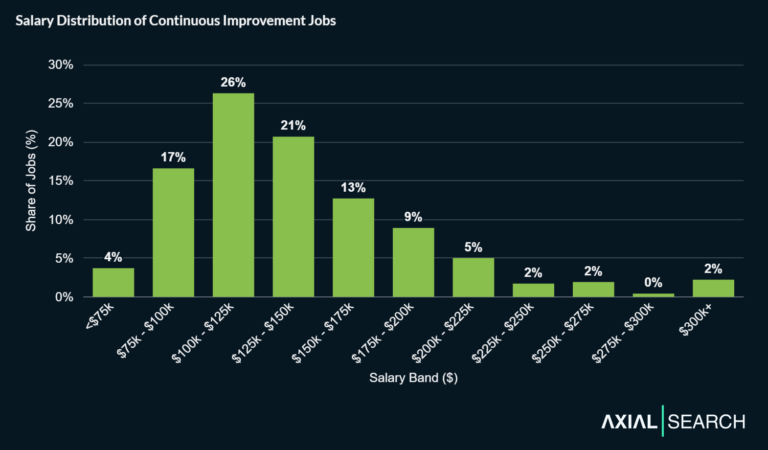
Continuous Improvement Jobs in 2026: Analyzing 1,000+ Posts
Continuous improvement professionals redesign operational workflows to eliminate waste, reduce costs and boost efficiency. We analyzed 1,086 continuous improvement jobs...
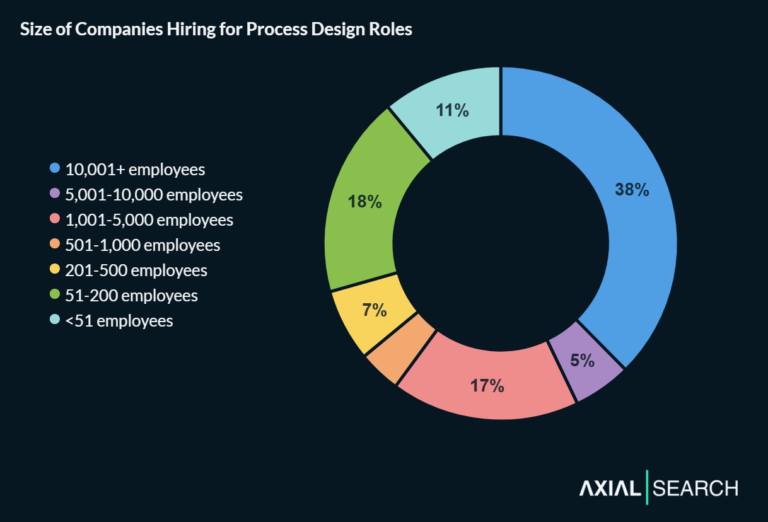
Market Analysis: Insights from 928 Process Design Jobs
Process design professionals analyze and redesign workflows, eliminating waste and building systems that improve how organizations operate. We analyzed 928...
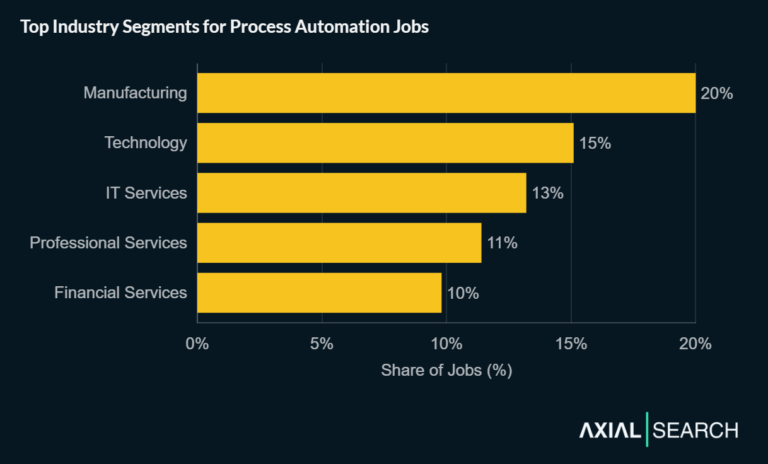
What 695 Process Automation Jobs Reveal About 2026
Process automation professionals design robotic workflows, integrate automation platforms and eliminate manual processes across business operations. We analyzed 695 process...
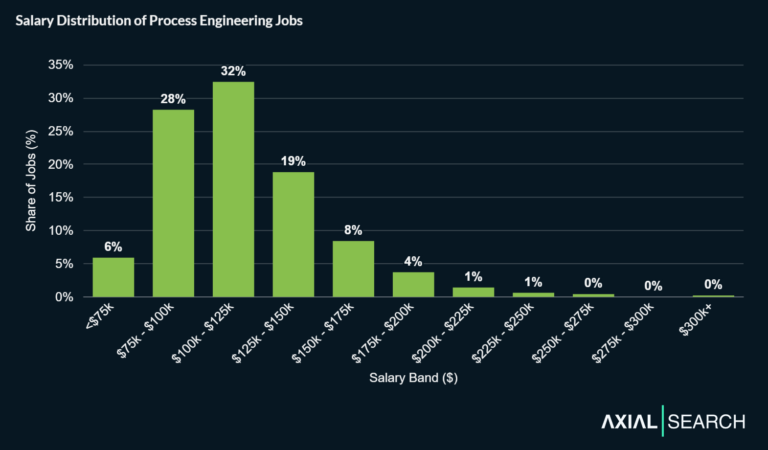
Process Engineering Jobs: Insights from 6,000+ Posts
Process engineers design and optimize workflows to improve efficiency, reduce waste and ensure product quality. We analyzed 6,210 process engineering...

What You Need to Know About Operational Excellence Jobs
Organizations face relentless pressure to do more with less while preserving quality and customer satisfaction. Yet, many struggle to turn...

A Comprehensive Breakdown of Process Improvement Jobs
Companies lose revenue through inefficient processes. Targets process improvement initiatives can tackle this waste head-on. Process mining exposes bottlenecks and...