
Inside the AI Engineering Job Market: 43,500 Postings Analyzed
The complete picture of the AI engineering job market in 2026: hiring demand, what these roles pay, where the jobs are, who's hiring and what it takes to get in.
 Updated: July 21, 2026
- Hiring volume is high and rising: AI engineering postings kept climbing quarter on quarter — more than any other AI function and still growing.
- The executive tier breaks the pattern: The overall median AI engineering salary is $176,000, and IC and early-management pay tracks predictably up through Director — but VP and C-suite bands actually trail Director, a thinner, more variable sample at the very top rather than a continued climb.
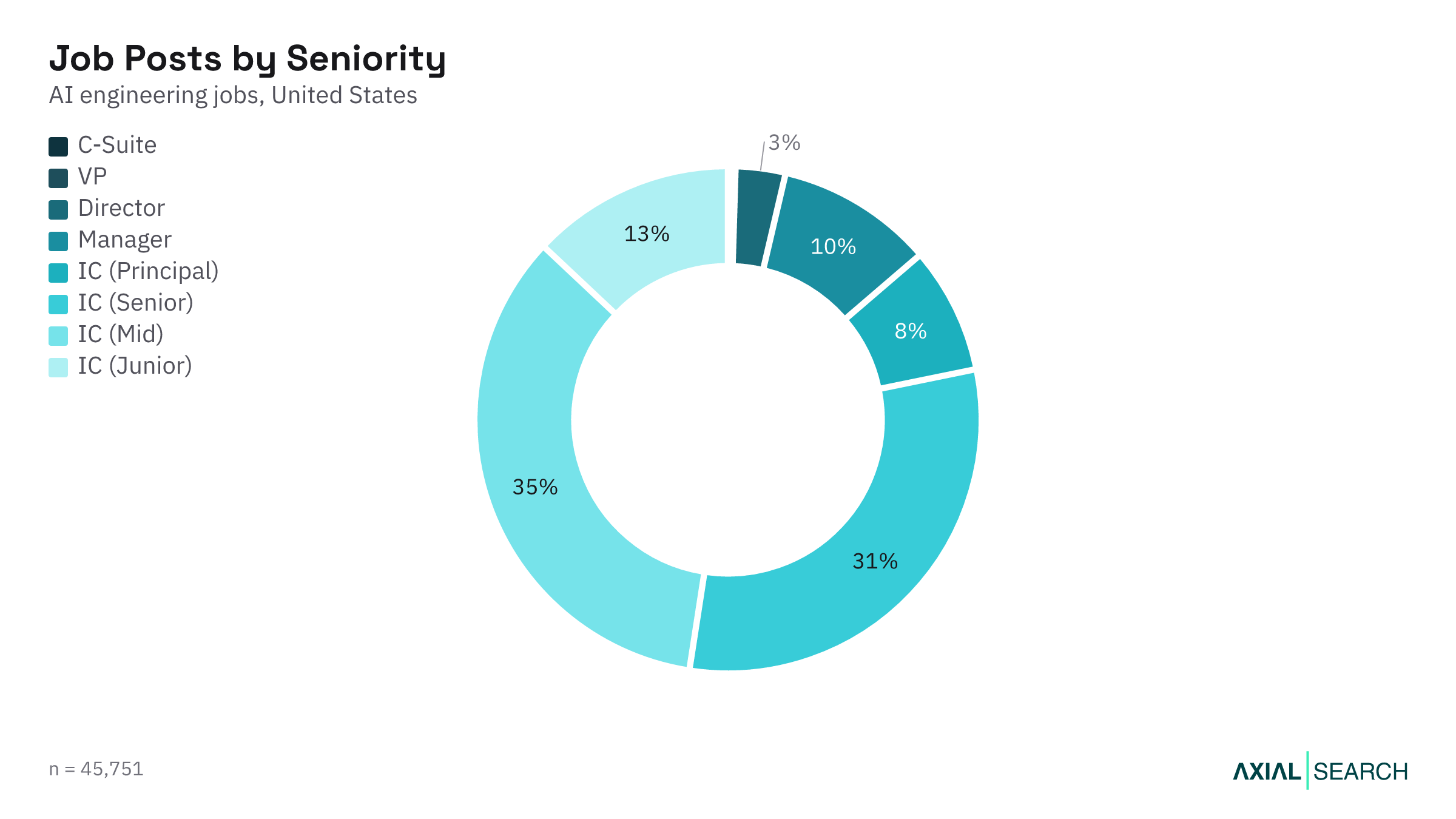
- This is an IC market: 66% of AI engineering postings are individual-contributor roles, with 35% at mid-level and 31% at senior level; management roles account for just 10%, and Director-plus for 3%.
- Geography spreads wider than expected: California leads at 22%, New York at 11%, Texas at 10% — but the top three states still leave two-thirds of AI engineering jobs distributed across the rest of the country.
- Professional services and tech dominate hiring: 28% of AI engineering roles come from professional services firms, 24% from technology companies, and 47% from enterprises with 10,000+ employees.
- Breadth beats depth: Python shows up in 62% of AI engineering postings, cloud platforms in 55%, foundation models in 51% — employers want engineers who can work across the full stack, not specialists in one tool.
What do AI engineers do?
AI engineers build the infrastructure, pipelines and production systems that turn AI models into working software — the 43,480 US postings analyzed here consistently ask for people who can ship, not just experiment.
That covers the model layer, the deployment pipeline and the monitoring that keeps a system running once it's live, end to end, not just training a model in a notebook — the profile AI recruitment is built to surface. It's a hands-on execution role, not a strategy or stakeholder-management one — employers care more about what you've built than what you can pitch.
The leadership profile employers screen for in AI engineering roles
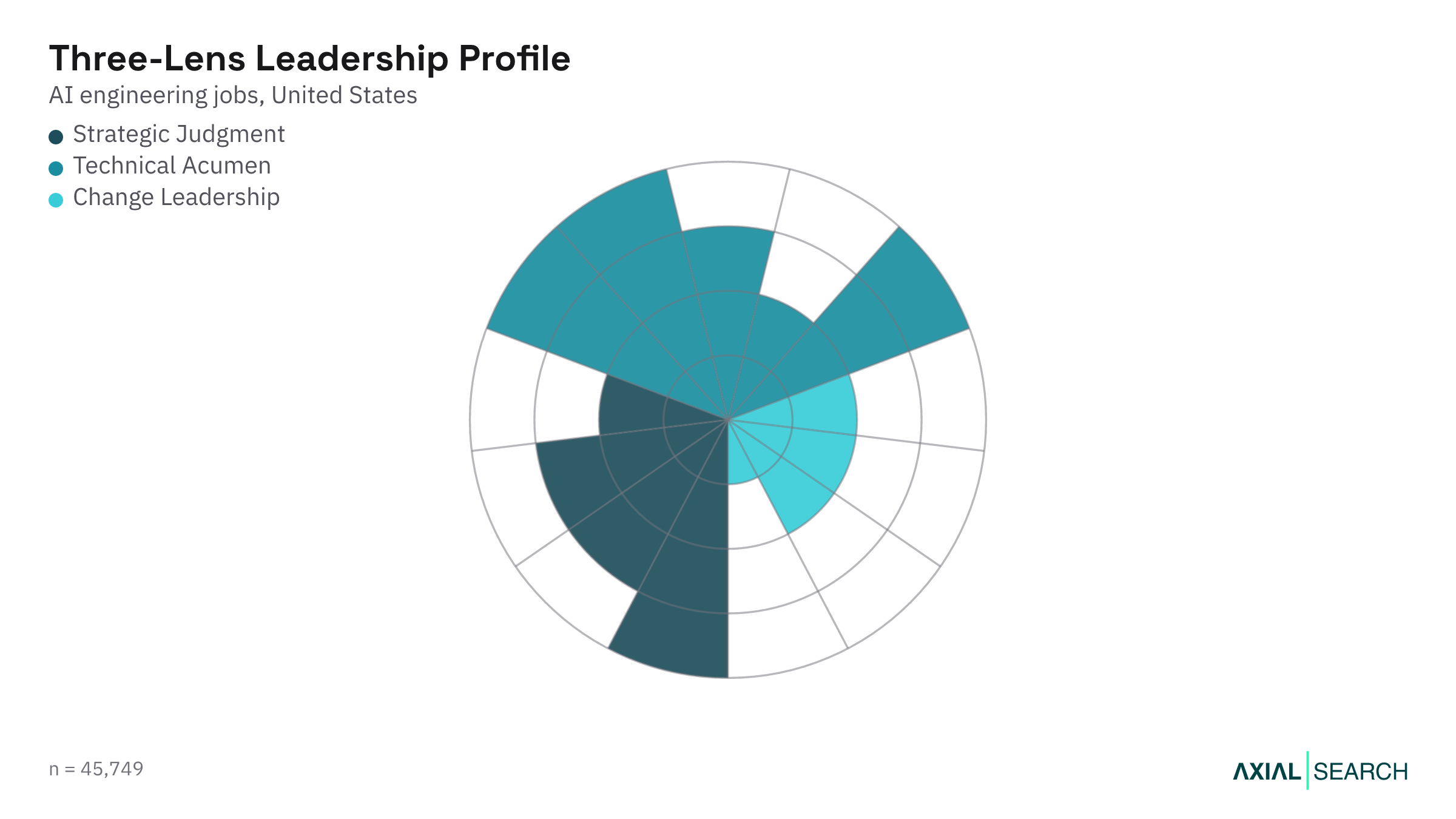
AI literacy and hands-on execution top what employers screen for in AI engineering candidates, ahead of architectural fluency, data readiness judgment and operating model design — mapped through our Three-Lens Leader framework. Securing sponsorship, shaping the narrative and driving adoption rank near the bottom: this is a builder role, not a stakeholder-management one.
The skills AI engineers need on the job
Python and cloud platforms are the two most-requested skills, each mentioned in more than half of AI engineering postings.
Breadth across the stack matters more than depth in any one tool — foundation models, observability and RAG round out what employers screen for. The full skills breakdown, including tools and certifications, lives on our AI engineering careers guide.
The credentials and experience AI engineering roles expect
Most AI engineering postings ask for a technical degree and a handful of years of hands-on building experience, not a decade in the seat.
The bar rises gradually with seniority rather than jumping sharply, and a portfolio of shipped systems carries more weight than the credential itself. See our AI engineering careers guide for the full qualifications and year-by-year breakdown.
Is AI engineering a good career?
AI engineering is the largest single AI hiring category by volume, with a median salary of $176,000 and pay that keeps climbing at senior levels.
The volume is real and it isn't concentrated in a handful of employers: professional services, technology and IT services firms are all hiring, and the roles reward hands-on builders over strategists, which makes the path in more meritocratic than most AI functions.
What AI engineering roles pay
The median AI engineering salary is $176,000, and pay doesn't cap out when you stay technical — the Principal IC track reaches close to Director-level money, one of the few functions where that's true.
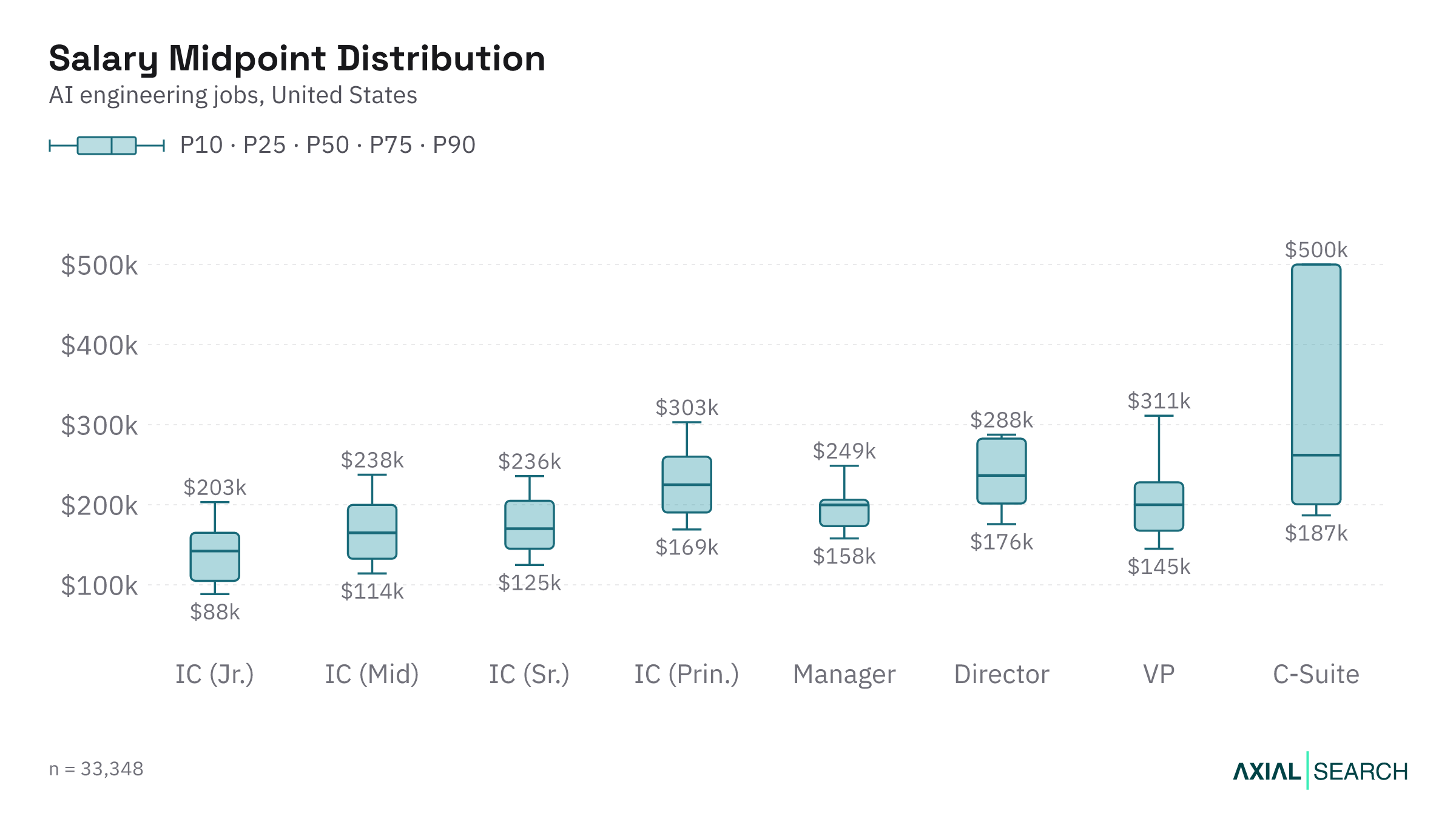
Bonus and equity sit on top of the posted band for a meaningful share of roles. The full breakdown by seniority, sector and location lives on our AI engineering salaries page.
How hot is the AI engineering job market?
AI engineering postings rose 14% over the last quarter compared with the quarter before, measured across the same tracked search terms in both periods. Steady growth in what is already the largest AI hiring category.
If you're hiring, expect continued competition for the best candidates. If you're job-hunting, the volume is there and expanding.
Who's hiring AI engineering talent
This is an individual-contributor market — 66% of AI engineering postings are IC roles, with management accounting for just 10%.
Professional services, technology and IT services firms post the most roles between them, and nearly half the market comes from companies with 10,000+ employees. That's the reality for both sides: candidates are competing against large, well-resourced employers, and employers are competing against each other for a thin pool. Our AI engineering hiring guide breaks down the full sector and company-size picture, plus who you're bidding against for talent.
Are AI engineering jobs remote?
Yes, mostly — of AI engineering postings that specify a work model, 48% are hybrid and 32% are fully remote, with just 20% fully on-site.
So while the work clusters geographically, a meaningful share of it can be done from anywhere.
Where AI engineering jobs are located
California accounts for 22% of AI engineering postings, followed by New York at 11% and Texas at 10% — but the top five states still leave roughly half the market spread across the rest of the country.
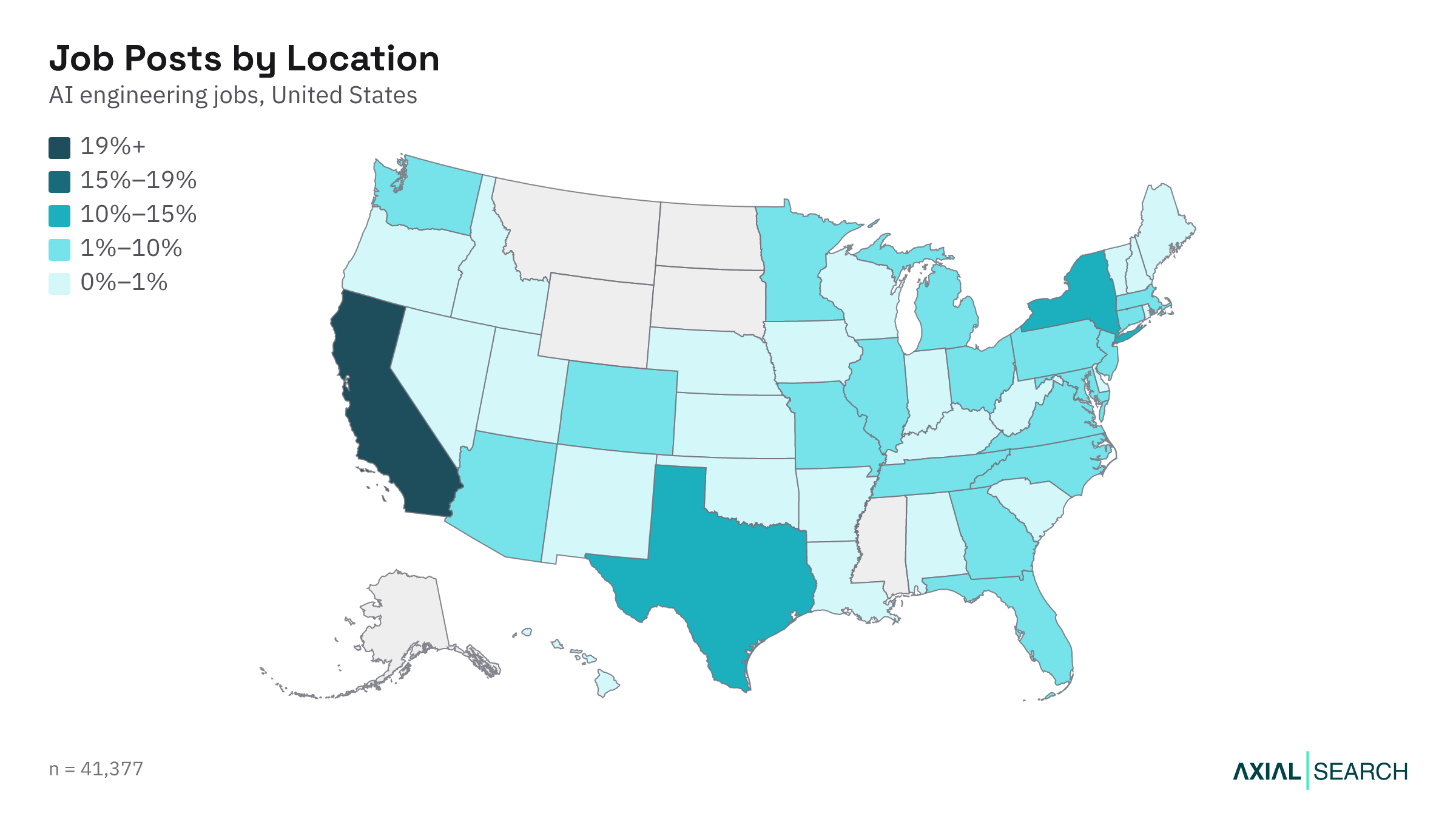
Neither candidates nor employers should read that as a hard requirement to be in one of the big three: remote and hybrid arrangements are common enough that geography is a preference, not a gate. The full state and city breakdown lives on our AI engineering hiring guide.
Final Thoughts
For candidates. AI engineering is a hands-on execution role, and the market pays for it. What makes the shortlist is fluency with Python, cloud platforms and foundation models, plus the ability to build production systems that scale. Lead with what you've shipped and the outcomes it drove — a degree helps at the margin, but no credential substitutes for a portfolio of working systems. If you're at the Principal IC level or considering a move into management, know that the technical track pays competitively with leadership roles through Director, so staying hands-on doesn't cap your ceiling. If you prefer building production systems over experimenting with models, the ML engineering job market rewards infrastructure depth.
For employers. This is a deep, competitive pool — roughly 43,500 US postings ask for the profile, two-thirds of it individual contributors, and the capabilities that matter most (AI literacy and hands-on execution) are the ones that show up in a portfolio, not on a resume. Interview around real systems, not years in seat, and be ready to move quickly.
Methodology & sources
- Data sources. Job data is collected from publicly available postings on online job boards and updated weekly, covering US roles posted since January 2026. Explore and filter it on our live AI job market dashboard.
- Salaries are derived from the minimum and maximum bands employers post, annualized and reported as percentiles, not averages. The full salary breakdown by seniority, sector and location lives on AI engineering salaries.
- Hiring volume counts matching postings per week; location, seniority and sector figures are each group's share of postings.
- The leadership profile reflects the relative emphasis across leadership capabilities inferred from job-description language; skills are drawn from AI analysis plus programmatic scanning of posting text.
- Skill and capability figures reflect what postings mention — an item not appearing means it wasn't stated in the posting, not that it isn't wanted.

How to Become an AI Engineer in 2026
How to become an AI engineer in 2026: the qualifications, certifications, skills and career path that 43,480 US job postings actually ask for.

What to Know When Hiring AI Engineers
What it takes to hire AI engineers in 2026: pay benchmarks, market competitiveness, where talent concentrates and a free job description template, from 43,480 US postings.

What AI Engineering Roles Pay in 2026
What AI engineering roles pay in 2026: median salary, pay by seniority, top-paying sectors and locations, and how often bonus and equity are mentioned in US job postings.
Turn AI ambition into lasting business value
Whether you're hiring your first AI leader or scaling enterprise transformation capability, we help you define, assess and recruit the people who make it stick.