
AI Product Management Jobs in 2026: What 12,400 Postings Reveal
The complete picture of the AI product job market in 2026: hiring demand, what these roles pay, where the jobs are, who's hiring and what it takes to get in.
 Updated: September 15, 2026
- Manager-heavy market: 47% of AI product postings are Manager-level — this is a market built around ownership, not junior support.
- California and New York dominate: 25% of AI product roles are in California, another 16% in New York, with San Francisco leading at city level.
- Technology and finance lead hiring: Technology firms post a third of all AI product roles; Financial Services another 13%.
- Enterprise-scale volume: 43% of AI product postings come from companies with 10,000+ employees, so you're often competing against large incumbents.
- Hybrid is default: 48% of AI product roles specify hybrid work, 31% remote, 20% in-person.
- Use-case judgment ranks highest: The most in-demand AI product capability is selecting the right problems to solve — strategy beats hands-on building.
What do AI product managers do?
AI product managers own the call on which problems are worth solving — use case selection is the single most in-demand capability employers screen for across the 12,397 US postings analyzed here, ahead of AI literacy and value framing.
That means pointing a team at the right customer problem and killing the ones that won't pay off, not shipping the most features — exactly the judgment AI recruitment screens for. It's a judgment-and-influence role, not a hands-on execution one — employers care more about the calls you made than the code you wrote.
The leadership profile employers screen for in AI product roles
Use case selection and AI literacy top what employers screen for in AI product candidates, ahead of value framing and hands-on execution — mapped through our Three-Lens Leader framework.
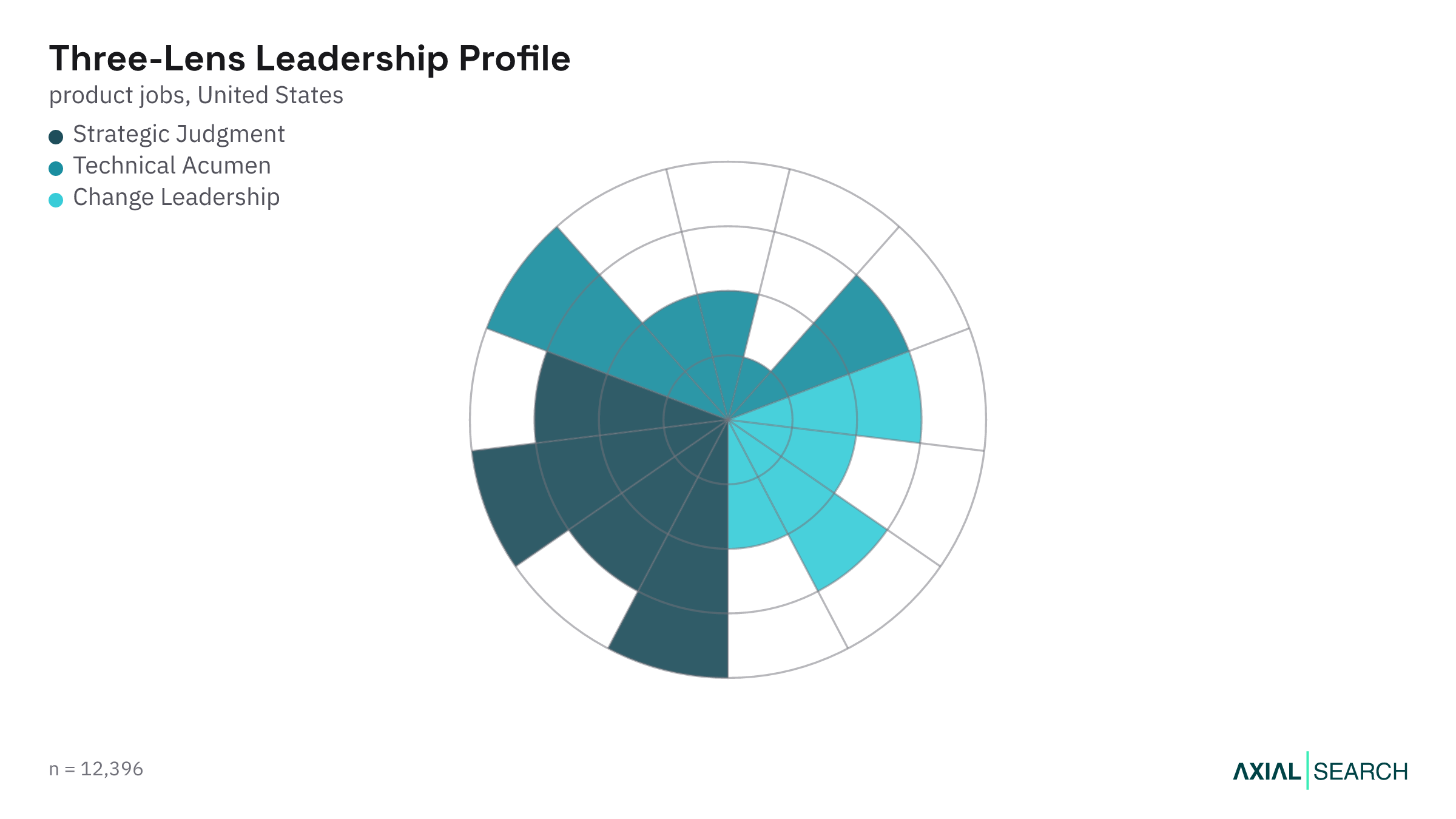
Securing sponsorship ranks unusually high for a product role, because AI bets need executive air cover to survive contact with the organization; architectural fluency, data readiness judgment and governance discipline rank near the bottom — this is a role won on the decisions you make, not the infrastructure you inherit.
The skills AI product managers need on the job
Agile is the single most-requested skill in AI product postings, mentioned in 28% of them, with foundation models also highly sought after.
Observability and cloud platforms round out what employers screen for beyond core delivery skills. The full skills breakdown, including tools and certifications, lives on our AI product careers guide.
The credentials and experience AI product roles expect
Most AI product postings ask for a technical degree and around seven years of experience, not a decade in the seat.
Many postings specify a degree requirement, and Computer Science dominates the fields employers name. See our AI product careers guide for the full qualifications and year-by-year breakdown.
Is AI product management a good career?
AI product management is one of the steadiest hiring categories in AI, with Manager-level roles making up nearly half the market.
The volume is real and it isn't concentrated in a handful of employers: Technology, Financial Services and Professional Services firms are all hiring, and the leadership bar rewards judgment over hands-on building, which makes this more of a mid-career destination than an entry-level one.
What AI product roles pay
The median AI product salary is competitive, and pay doesn't cap out when you stay technical — the Principal IC track reaches close to Director-level money, one of the few tracks where that's true.
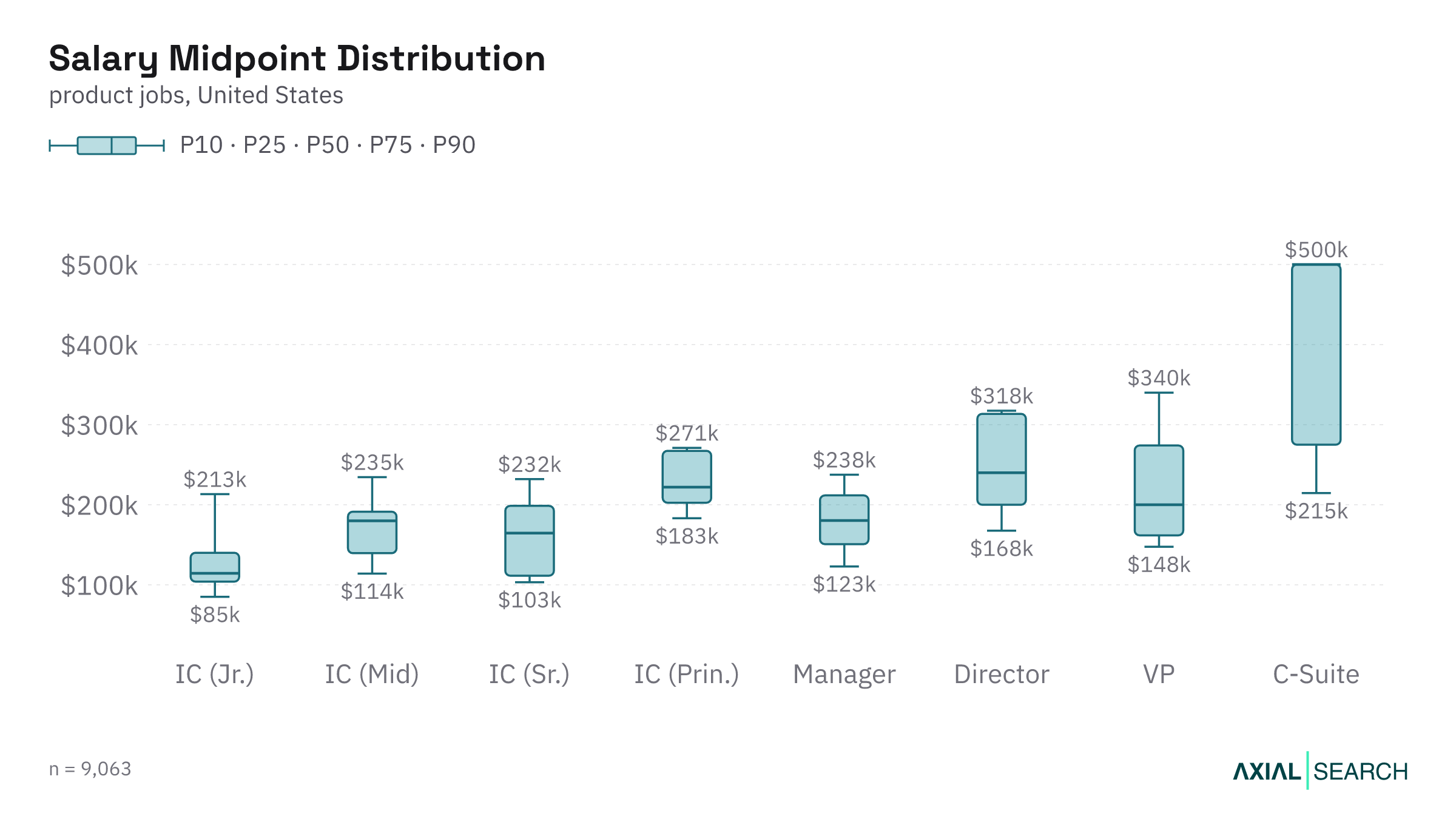
Bonus and equity sit on top of the posted band for a meaningful share of roles. The full breakdown by seniority, sector and location lives on our AI product salaries page.
How hot is the AI product management job market?
93% of US AI product postings sit at senior level or above. Junior hiring is close to non-existent, so the bar to enter is ownership experience.
For candidates, that's a strong signal: AI product roles are out there, and employers are staffing up consistently. For hirers, it means you're competing with hundreds of other postings every week, so speed and clarity matter.
Who's hiring AI product talent
This is a market built around ownership — nearly half of all AI product postings are Manager-level, and just 2% are junior, so companies are hiring people to own product direction, not support someone else's roadmap.
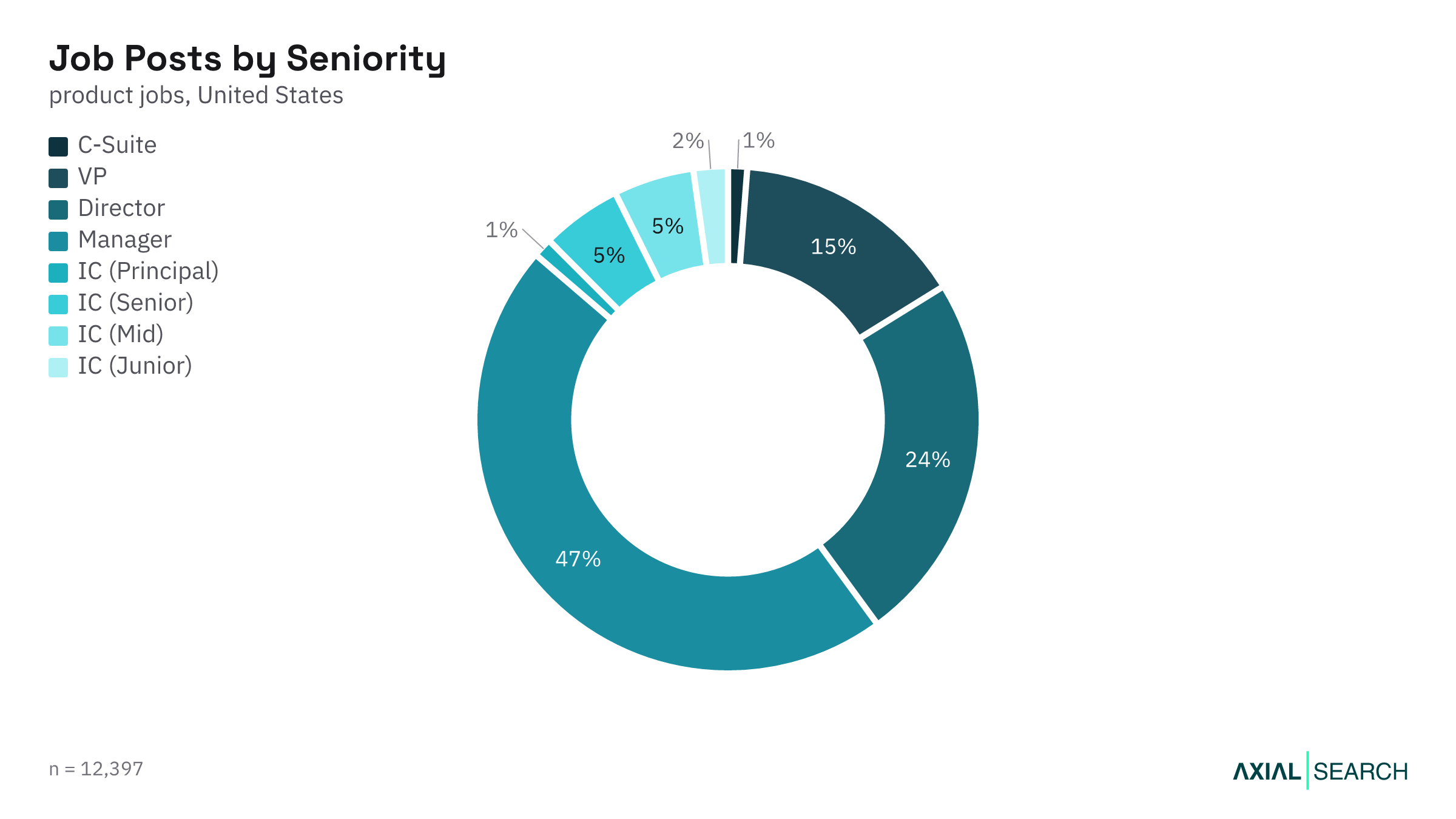
Technology and Financial Services firms post the most roles between them, and 43% of the market comes from enterprise-scale companies with 10,000+ employees. Our AI product hiring guide breaks down the full sector and company-size picture, plus who you're bidding against for talent.
Are AI product management jobs remote?
Real flexibility — of AI product postings that specify a work model, 48% are hybrid and 31% are fully remote.
So while the work clusters geographically, as the next section shows, a meaningful share of it can be done from anywhere.
Where AI product jobs are located
California accounts for 25% of AI product postings and New York another 16% — together more than two-fifths of the market.
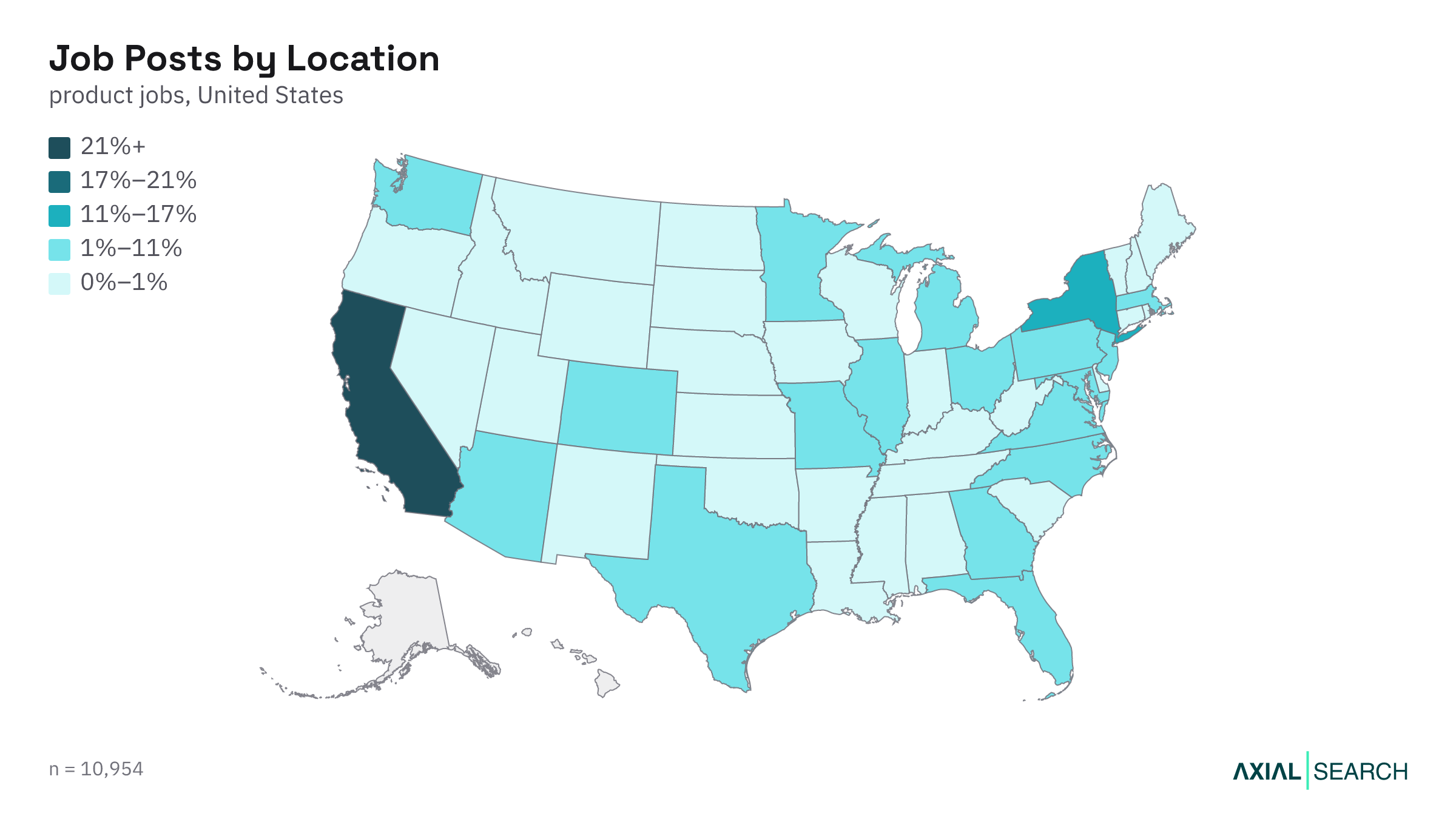
San Francisco leads cities at about 10% of postings, and Texas and Washington each carry real volume, so while the coasts dominate, this isn't only a Bay Area story. The full state and city breakdown lives on our AI product hiring guide.
Final Thoughts
For candidates. AI product is one of the steadiest hiring categories in AI, and Manager-level roles make up nearly half the market — so if you can frame AI work in business terms and own product direction, the opportunities are real. The market skews coastal and enterprise-heavy, which means competition is fierce in the hubs but volume is high enough that persistence pays off. Breadth across Agile, foundation models, observability and cloud platforms matters more than depth in one tool, and the top quartile of roles pay significantly more than the median, so negotiation matters. If you focus more on shaping organizational direction than shipping features, the AI strategy job market offers a natural pivot.
For employers. You're competing with hundreds of other postings every week, many from enterprise-scale technology and finance firms with deep pockets and brand recognition. Speed, clarity and a real story about the work matter more than perks. The best AI product candidates are choosing between multiple offers, so if your process drags past two weeks or your JD reads like a laundry list, you've already lost. Hybrid is now table stakes — 48% of roles specify it — and if you're not offering equity or bonus at Director and above, you're behind the market.
Methodology & sources
- Data sources. Job data is collected from publicly available postings on online job boards and updated weekly, covering US roles posted since January 2026. Explore and filter it on our live AI job market dashboard.
- Salaries are derived from the minimum and maximum bands employers post, annualized and reported as percentiles, not averages. The full salary breakdown by seniority, sector and location lives on AI product salaries.
- Hiring volume counts matching postings per week; location, seniority and sector figures are each group's share of postings.
- The leadership profile reflects the relative emphasis across leadership capabilities inferred from job-description language; skills are drawn from AI analysis plus programmatic scanning of posting text.
- Skill and capability figures reflect what postings mention: an item not appearing means it wasn't stated in the posting, not that it isn't wanted.

The Skills That Land AI Product Management Roles in 2026
How to become a product professional in 2026: the leadership capabilities employers screen for, the experience and degrees required, the certifications that matter, and the skills most in demand across US postings.

Analyzing AI Product Management Hiring in 2026
Where AI product jobs are in 2026: hiring demand and trend, top states and cities, who's hiring by sector and company size, and the mix of seniority, contract type and remote work across US postings.

AI Product Management Salaries: 12,400 Postings, Benchmarked
What AI product roles pay in 2026: median salary, pay by seniority, top-paying sectors and locations, and how often bonus and equity are mentioned in US job postings.
Turn AI ambition into lasting business value
Whether you're hiring your first AI leader or scaling enterprise transformation capability, we help you define, assess and recruit the people who make it stick.